Equipment constantly triggering overheating alarms on the floor? You open it up and find the cabinet cooling fan bearings are either seized up and screeching, or completely dead. More often than not, this isn’t a motor quality issue—it’s the wrong protection rating. Metal dust on site clogs the air ducts, or moisture from washdowns seeps into the coils, instantly dropping insulation resistance and burning out the motor.
To fix these hard failures, you need to nail down the equipment’s IP rating. Don’t assume slapping a high spec on the PO solves everything. Underspecify the fan IP rating, and it won’t survive harsh environments; overspecify it, and you choke your cooling efficiency. Let’s look at the actual engineering math behind motor and system protection.
The Mechanical Boundaries Behind the Numbers
Every engineer knows the basic cheat sheet: the first digit is dust (0-6), the second is water (0-8). But on a drawing or the factory floor, these numbers represent hard mechanical boundaries, not just a sliding scale of “better.”
Take the industrial staples: IP55 and IP65. A lot of field engineers treat them as roughly the same, thinking IP65 is just slightly stricter on dust. The reality? IP5X allows limited dust ingress, provided it doesn’t cause a short circuit or jam the bearings. But put that in a cement plant or flour mill. That “allowed” dust, combined with ambient humidity, bakes into a concrete-like shell over the motor windings in just a few months, completely destroying any heat dissipation. In these specific conditions, there’s no trade-off. You bite the bullet and go for the totally dust-tight IP6X.
The Waterproofing Trap: Washdowns Aren’t “Submersions”
The pitfalls with the water protection digit are even deeper. In retrofit projects, I’ve seen way too many disasters where IP67 motors were installed on food washdown lines.
The IPX7 standard means “survives 30 minutes of submersion”—it tests static water pressure. But in food plants, pharma facilities, or machining floors, operators clean up by blasting equipment with high-pressure hoses. Faced with powerful water jets from all directions (which actually aligns with the IPX6 test: 100 liters/minute through a 12.5mm nozzle), the seals on an IP67 motor sometimes fail against that sudden dynamic pressure. Water just gets forced right past the housing.
The engineering reality is: surviving submersion (IPX7/8) does not mean surviving powerful water jets (IPX5/6). For aggressive washdown environments, you are better off specifying IP66 equipment. And if you’re dealing with high-temperature, high-pressure steam cleaning, you need to look at IP69K. The standard IP matrix won’t cover you anymore.
The System Weak Link: Trade-offs in Cabinet Cooling
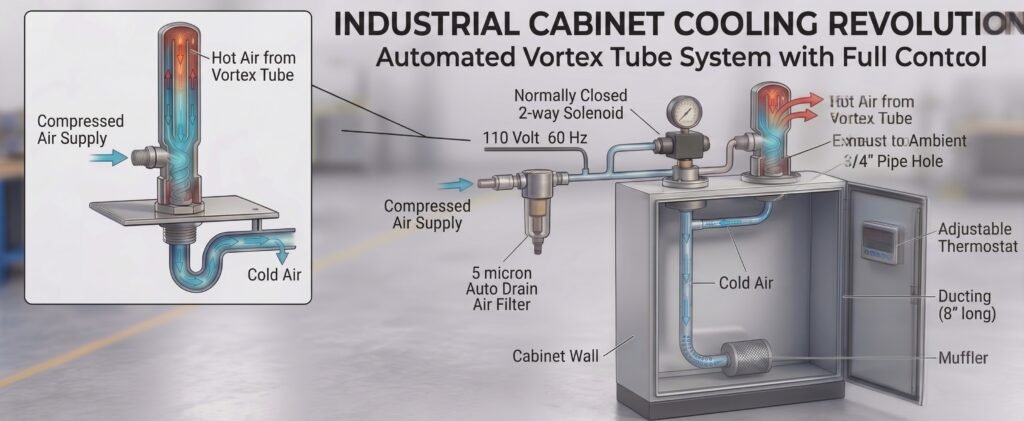
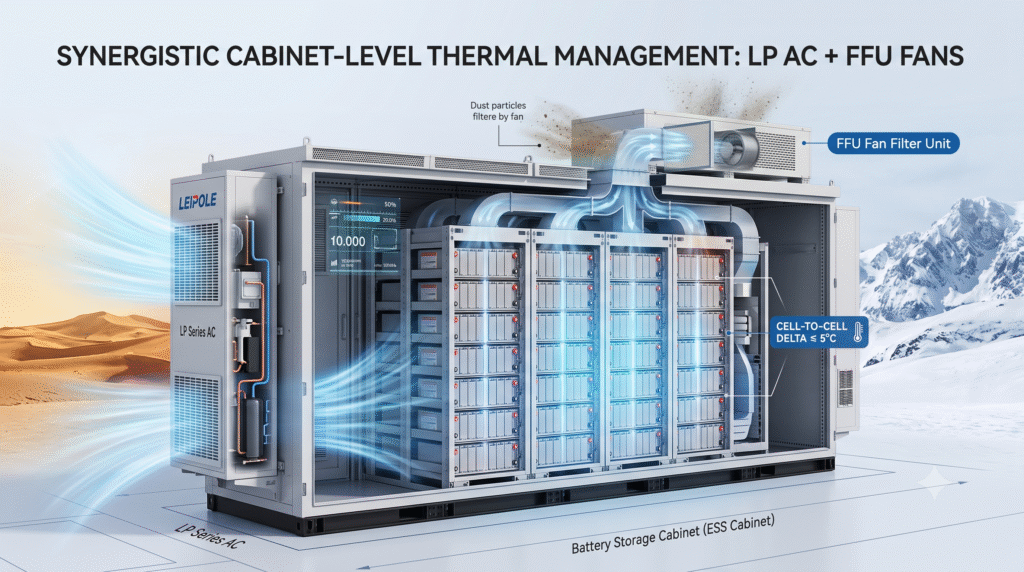
It’s relatively easy to build the main motor with a Totally Enclosed Fan Cooled (TEFC) design. But the minute your control system requires independent active cooling, the headache begins.
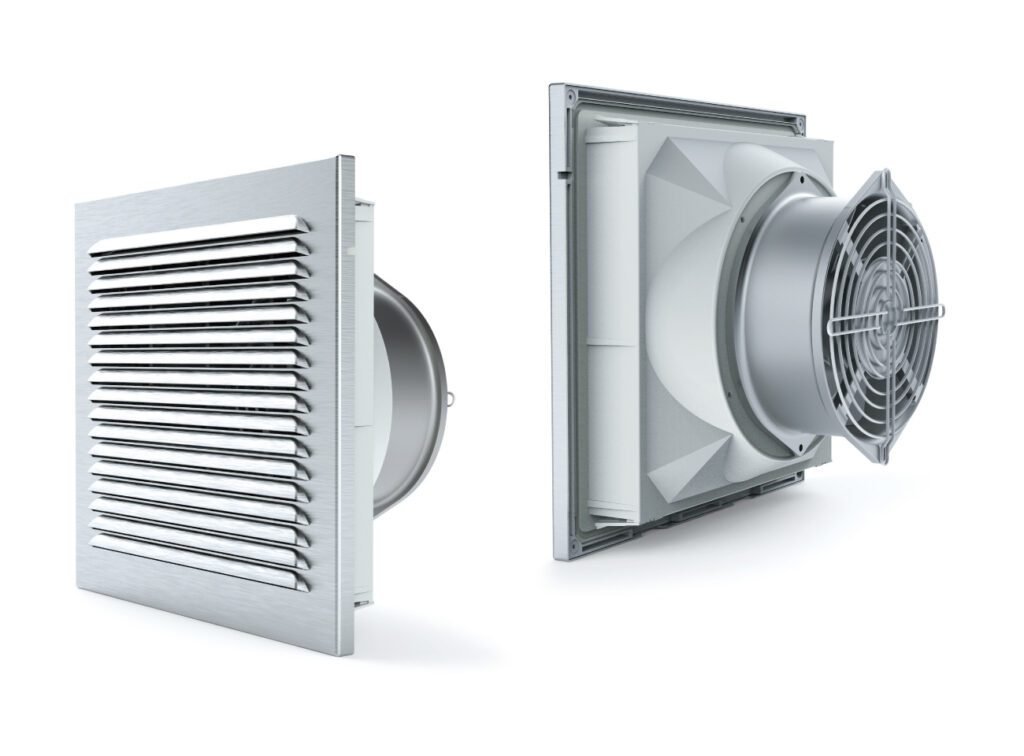
Slap a cabinet cooling fan onto a distribution panel or a VFD enclosure, and that fan immediately becomes the weakest link in your electrical system’s defense. To move air, a fan needs an inlet and an exhaust. Water and dust naturally ride that airflow right in. If there’s splashing cutting fluid on the shop floor, a standard IP44 fan won’t last six months before the bearings corrode. You need to specify a much higher fan IP rating, like a waterproof fan with a fully resin-potted stator.
But here’s the hard physical trade-off: higher protection ratings usually mean higher airflow resistance. Denser dust filters, complex labyrinth seals, or internal potting take up physical cross-sectional area. Blindly upgrading a fan from IP44 to IP65 means the airflow that previously managed the cabinet’s heat load might suddenly fall short. You have to recalculate the thermal load. You might need to upsize the fan or bump up the RPM, which then introduces noise issues you have to engineer around. Pushing for a higher IP rating without accounting for airflow derating is just planting a thermal time bomb in your equipment.
Chasing double eights (IP68) across the board is often just expensive psychological comfort. Systems that actually hit their design life in the field do so because the budget was spent solving the right problem: figuring out if the equipment is failing due to dust buildup, condensation from temperature swings, or the operator’s shift-change water hose—and engineering specifically for that reality.
Instead of guessing the thermal load and airflow derating, you need to run the numbers. You can calculate your current cabinet cooling load and select the correct fan IP rating for your specific environment using this sizing tool: https://leipole.com.sg/leipole-electrical-cabinet-cooling-fan-selection-tool/.
| First Digit | Engineering Definition | Real-World Application & Constraints |
|---|---|---|
| 0 – 3 | Protection against large objects (tools, hands, wires). | Indoor office environments only. Useless for industrial applications. |
| 4 | Protected against solid objects > 1.0mm. | Standard factory floors with no airborne dust. Fan Trade-off: Minimal airflow restriction, standard mesh filters work. |
| 5 | Dust Protected. Limited ingress permitted. | General machining areas. Dust enters but won’t short circuits. Fan Trade-off: Requires thicker filter mats; expect a 15-20% drop in free airflow. |
| 6 | Dust Tight. Total vacuum seal against dust. | Cement plants, flour mills, extreme environments. Fan Trade-off: Requires heavy labyrinth seals or fully potted electronics. Significant airflow derating. |
| Second Digit | Engineering Definition | Real-World Application & Constraints |
|---|---|---|
| 0 – 3 | Drops and light rain/sprays. | Indoor equipment subject to occasional ceiling drips or condensation. |
| 4 | Splashing water from any direction. | Machining centers with coolant splash. Minimum baseline for most industrial floor equipment. |
| 5 | Water Jets (6.3mm nozzle, 12.5 L/min). | Standard hose-down cleaning. Cannot handle targeted high-pressure sprays. |
| 6 | Powerful Water Jets (12.5mm nozzle, 100 L/min). | Heavy washdown areas, ship decks. Crucial: Capable of handling dynamic pressure that would breach an IP67 seal. |
| 7 | Temporary Submersion (up to 1m for 30 mins). | Static flooding scenarios. Warning: Often fails if hit by high-pressure water jets (IPX5/6 conditions). |
| 8 | Continuous Submersion (under pressure). | Deep water pumps, underwater sensors. Requires hermetic sealing. |
| 9K | High-temp, High-pressure washdown. | Food & Beverage processing, slaughterhouses (80°C water at 80-100 bar). Standard seals will melt or blow out. |
| Standard Rating | The Perception | The Engineering Reality | Cabinet Fan Recommendation |
|---|---|---|---|
| IP44 | “Good enough for the factory.” | Will fail in 6 months if exposed to fine metal dust or direct coolant spray. | Use only in clean, dry, climate-controlled electrical rooms. Maximum cooling efficiency. |
| IP55 | “The industrial standard.” | Great balance. Handles general dust and light hose-downs. | The go-to for standard manufacturing. Calculate thermal load with a standard filter pressure drop. |
| IP65 | “Completely waterproof.” | It is washdown-ready, but absolutely not submersible. | Requires dense filters and sealed bearings. You must upsize the fan or RPM to compensate for the severe airflow restriction. |
| IP67 | “The ultimate protection.” | Will survive a flooded trench, but a worker with a pressure washer might destroy it. | Avoid for active ventilation. If you need IP67, you should be looking at closed-loop Air-to-Air or Air-to-Water heat exchangers, not standard fans. |