When you are sourcing a fan filter unit manufacturer, the first step is to clarify what type of fan filter unit your application actually requires.The term FFU (Fan Filter Unit) is commonly associated with cleanroom ceiling systems used in semiconductor, pharmaceutical, laboratory, and other controlled environments. However, industrial electrical cabinets use a different type of fan filter solution.For electrical control cabinets, automation panels, industrial enclosures, BESS cabinets, and machinery, the requirement is usually not HEPA air purification. The objective is to remove heat from the enclosure while preventing dust and other contaminants from entering the cabinet.This distinction is important when selecting a manufacturer.For industrial enclosure applications, look for a manufacturer that specializes in cabinet fan filters, enclosure ventilation, and electrical cabinet thermal management, rather than a cleanroom FFU supplier.

What Is a Fan Filter Unit for an Electrical Cabinet?
A cabinet fan filter unit is a combination of a ventilation fan and a filter assembly mounted directly to an electrical enclosure.
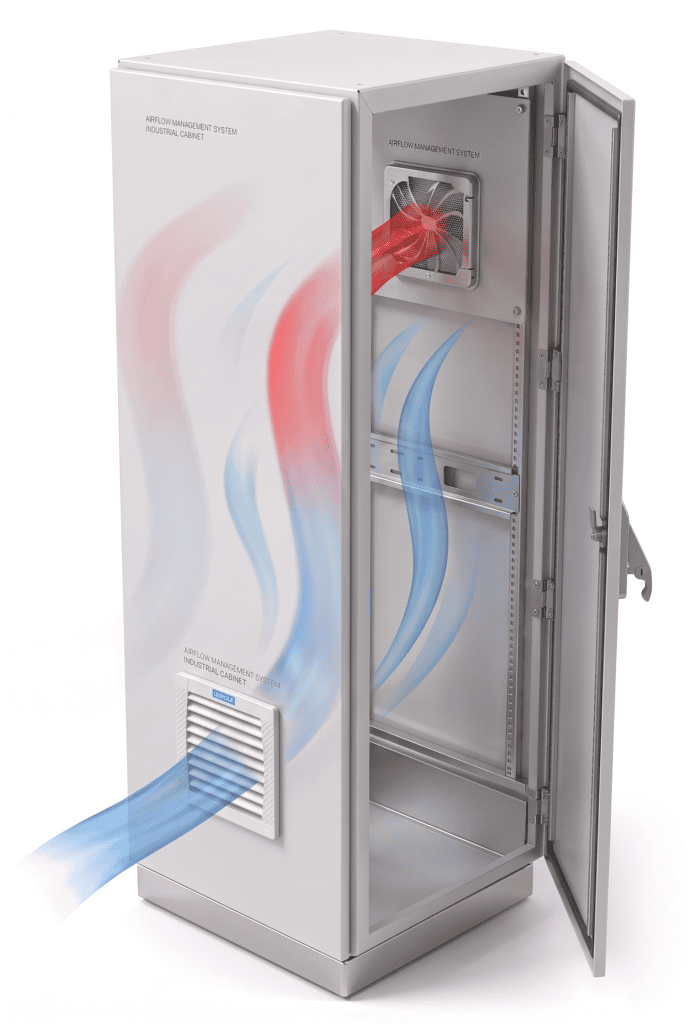
The fan draws cooler ambient air into the cabinet through the filter. The filter captures dust and airborne particles before they reach sensitive electrical components. A corresponding outlet filter or exhaust fan allows hot air to leave the enclosure.
The basic airflow path is:
Cool ambient air → Filter → Cabinet → Heat-generating components → Exhaust
This simple ventilation system helps control the internal temperature of the enclosure without requiring a cabinet air conditioner.
Typical applications include:
- Electrical control cabinets
- Industrial automation panels
- PLC and VFD cabinets
- Machine control systems
- Power distribution enclosures
- Renewable energy equipment
- Battery energy storage system (BESS) cabinets
- Telecommunications equipment
- Industrial machinery
- Outdoor electrical enclosures
For these applications, the key requirements are generally airflow, dust protection, IP rating, voltage compatibility, filter performance, installation space, and maintenance accessibility.
Cabinet Fan Filter vs. Cleanroom FFU: What Is the Difference?
One of the most important purchasing decisions is understanding that these are two different product categories.
| Feature | Cabinet Fan Filter | Cleanroom FFU |
|---|---|---|
| Primary purpose | Electrical enclosure cooling | Cleanroom air purification |
| Typical installation | Electrical cabinet / control panel | Cleanroom ceiling |
| Main objective | Remove heat and reduce dust ingress | Deliver filtered clean air |
| Typical filter | Industrial filter mat such as G4 | HEPA / ULPA |
| Application | Automation, machinery, energy, power equipment | Semiconductor, pharmaceutical, laboratory |
| Airflow design | Cabinet ventilation | Room-level air circulation |
| Main buyer | Panel builder / OEM / automation integrator | Cleanroom contractor / facility engineer |
If your goal is to protect PLCs, VFDs, power supplies, contactors, drives, or other electrical components from heat and industrial dust, a cabinet fan filter is normally the more appropriate solution.
A cleanroom FFU with a HEPA or ULPA filter is designed for a completely different environmental requirement.
What Should You Look for in a Cabinet Fan Filter Manufacturer?
When comparing manufacturers, do not evaluate the fan based only on airflow or price.
A suitable supplier should be able to provide a complete enclosure ventilation solution covering the following factors.
1. Airflow Capacity
The fan must provide sufficient airflow to remove the heat generated inside the enclosure.
A small control panel may only require a compact fan filter, while a large automation cabinet or high-density power enclosure may require significantly higher airflow.
LEIPOLE’s enclosure cooling portfolio includes fan filter models covering different cabinet sizes and airflow requirements. Its FKL99 range, for example, provides multiple airflow configurations for different electrical enclosure applications.
When comparing products, check:
- Maximum airflow
- Rated airflow under installed conditions
- Pressure characteristics
- Fan size
- Required cut-out dimensions
- Operating temperature
Do not select a fan solely by its maximum free-air airflow. The actual airflow can decrease after the fan, filter, and cabinet resistance are taken into account.
2. Filter Performance
The purpose of the filter is not to create a cleanroom.
For industrial electrical cabinets, the filter should provide an appropriate balance between dust protection and airflow resistance.
A filter that is too restrictive can reduce the actual airflow and increase the temperature inside the cabinet.
For example, LEIPOLE’s FKL99 series uses pleated G4 filter media designed to reduce airflow resistance while providing filtration for electrical enclosure cooling applications.
The right filter should therefore be evaluated according to:
- Dust concentration
- Required enclosure protection
- Airflow requirements
- Filter replacement interval
- Operating environment
- Maintenance requirements
3. IP Protection
For industrial applications, the protection rating of the fan filter assembly is particularly important.
A cabinet installed inside a clean factory may have very different requirements from an outdoor electrical enclosure exposed to dust, rain, or humidity.
Depending on the product and installation configuration, manufacturers may offer different IP protection levels.
For example, LEIPOLE’s FKL9923-162.024 is specified with an IP55 protection class and is designed for industrial enclosure thermal management.
When sourcing a fan filter unit, confirm the protection rating of the complete installed assembly, rather than assuming that the fan itself automatically determines the enclosure’s final IP rating.
4. Voltage and Electrical Compatibility
Panel builders often need different voltage configurations depending on the machine or control system.
Common options include:
- 24V DC
- 48V DC
- 115V AC
- 230V AC
For example, LEIPOLE’s enclosure fan filter range includes both DC and AC configurations.
The supplier should provide clear information about:
- Rated voltage
- Frequency
- Rated current
- Power consumption
- Motor type
- Wiring method
- Operating temperature
This is especially important for OEM equipment manufacturers producing the same machine for different markets.
5. Installation and Maintenance
A good cabinet fan filter should be easy for technicians to install and maintain.
Important design considerations include:
- Standardized cut-out dimensions
- Compact housing
- Tool-free or simplified filter replacement
- Easy access to the filter mat
- Secure electrical connections
- Availability of replacement filters
Maintenance is particularly important in dusty industrial environments.
A clogged filter can progressively reduce airflow. As airflow decreases, cabinet temperature increases, potentially reducing the service life of electrical components.
Where Should You Source a Fan Filter Unit Manufacturer?
There are several major manufacturing regions for industrial enclosure cooling products.
China
China has a large ecosystem of manufacturers producing:
- Fan filters
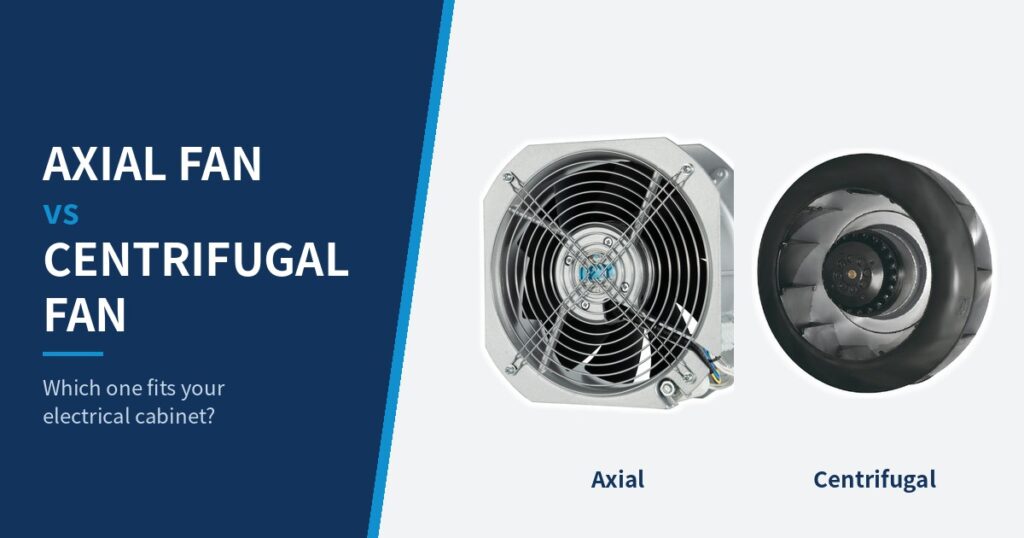
- Axial fans
- Centrifugal fans
- Cabinet air conditioners
- Enclosure heaters
- Thermostats
- Other electrical enclosure accessories
The major advantages are typically manufacturing scale, product variety, customization capability, and competitive pricing.
For OEMs and panel builders purchasing multiple product models, China can be particularly attractive when the supplier has its own engineering and manufacturing capabilities rather than simply trading products from multiple factories.
Germany and Europe
European manufacturers are well established in industrial enclosure thermal management.
They are often considered when buyers prioritize:
- Established industrial product platforms
- European engineering standards
- Long-term industrial supply relationships
- Compatibility with existing European enclosure systems
However, procurement teams should compare the complete landed cost, lead time, and customization options rather than evaluating suppliers only by country of origin.
United States
The US market has many suppliers serving:
- Industrial automation
- Electrical distribution
- Data infrastructure
- Machinery
- Energy systems
For North American projects, local inventory and service availability can be important purchasing factors.
Japan
Japanese manufacturers are also strong in industrial components and thermal management products, particularly where compact design, manufacturing consistency, and equipment integration are important.
The More Important Question: Manufacturer or Distributor?
Country is only one part of supplier selection.
Before choosing a fan filter manufacturer, determine whether you are purchasing directly from the manufacturer or through a distributor.
A direct manufacturer can potentially provide:
- Product customization
- OEM/ODM support
- Engineering assistance
- Product documentation
- Production planning
- Faster technical communication
- Private-label opportunities
- Replacement filter supply
For OEM equipment manufacturers and panel builders, these capabilities can be more valuable than simply finding the lowest unit price.
Why Choose LEIPOLE for Electrical Cabinet Fan Filters?
LEIPOLE focuses on electrical enclosure thermal management and industrial electrical components, rather than cleanroom air purification.
Its enclosure cooling portfolio includes fan filters, axial fans, centrifugal fans, enclosure air conditioners, vortex coolers, and other thermal management products.
This allows customers to select a cooling method according to the actual thermal load and operating environment of the enclosure.
Fan Filter Solutions for Different Cabinet Sizes
LEIPOLE offers multiple fan filter series for different installation requirements.
FK99 Series
The FK99 series is designed for electrical cabinet ventilation and features a front-cover design that allows the filter to be accessed and replaced more easily.
FKL99 Series
The FKL99 series uses pleated filter media and provides different airflow configurations for industrial enclosure cooling.
Models are available with different voltage and airflow specifications, allowing panel builders and OEMs to select an appropriate configuration for their enclosure design.
FKL55 Series
For applications where installation space is limited, the FKL55 series provides a more compact fan filter design.
The series includes different voltage and airflow configurations and is designed for enclosure and chassis thermal management.
From Standard Products to OEM Requirements
Not every enclosure has the same cooling requirement.
For OEM equipment manufacturers, LEIPOLE can support applications where customers need to evaluate:
- Fan size
- Airflow
- Voltage
- Cut-out dimensions
- Filter configuration
- Protection requirements
- Installation space
- Thermal load
- Application environment
This is particularly useful for manufacturers of industrial machinery, automation systems, renewable energy equipment, electrical distribution systems, and other equipment with integrated electrical enclosures.
How to Choose the Right Cabinet Fan Filter
Before sending an RFQ to a manufacturer, prepare the following information:
1. Cabinet dimensions
Provide the enclosure width, height, and depth.
2. Heat load
Estimate the total heat generated by the equipment inside the cabinet.
3. Ambient temperature
Provide the minimum and maximum ambient operating temperature.
4. Required protection level
Specify the desired IP protection level and environmental conditions.
5. Available power supply
For example:
- 24V DC
- 48V DC
- 115V AC
- 230V AC
6. Installation dimensions
Provide the available panel space and required cut-out dimensions.
7. Operating environment
Tell the manufacturer whether the cabinet is installed in:
- Factory automation
- Outdoor equipment
- Renewable energy systems
- BESS
- Machine tools
- Telecommunications
- Transportation
- Dusty or humid environments
With this information, the manufacturer can recommend a suitable fan filter instead of simply quoting the largest available fan.
Fan Filter or Cabinet Air Conditioner?
A fan filter is not always the right solution.
For relatively low or moderate heat loads where the ambient temperature is lower than the required cabinet temperature, filtered ventilation can be an economical cooling method.
However, when the cabinet has a high heat load, high ambient temperature, or requires a controlled internal temperature independent of the surrounding environment, a cabinet air conditioner may be more appropriate.
A simple selection approach is:
Low / moderate heat load → Fan Filter
Higher heat load or high ambient temperature → Cabinet Air Conditioner
Dust-sensitive cabinet → Filtered cooling
Extreme industrial environment → Consider specialized enclosure cooling
LEIPOLE provides multiple enclosure cooling technologies so that the cooling method can be selected according to the actual application rather than using one solution for every cabinet.
Who Should Buy Cabinet Fan Filters?
LEIPOLE’s cabinet fan filter solutions are particularly relevant to:
- Electrical panel builders
- Industrial automation companies
- Machine manufacturers
- OEM equipment manufacturers
- System integrators
- Renewable energy equipment manufacturers
- BESS manufacturers
- Power distribution equipment manufacturers
- Telecommunications equipment manufacturers
These buyers typically need repeatable products that can be integrated into their enclosure designs and reordered for future production.
Frequently Asked Questions
Is an electrical cabinet fan filter the same as a cleanroom FFU?
No.
Both contain a fan and filter, but they serve different purposes.
A cleanroom FFU is designed to supply highly filtered air into controlled environments, often using HEPA or ULPA filtration.
An electrical cabinet fan filter is designed primarily to remove heat from an enclosure while limiting dust ingress.
Do cabinet fan filters use HEPA filters?
Normally, industrial cabinet fan filters do not require HEPA filtration.
For most electrical enclosure applications, the objective is to balance dust protection with sufficient airflow. Industrial filter media such as G4-grade filtration can be more appropriate depending on the enclosure and environmental requirements.
How do I calculate the required fan airflow?
The required airflow depends primarily on:
- Internal heat generation
- Ambient temperature
- Maximum allowable cabinet temperature
- Installation conditions
- Heat dissipation through the enclosure
For higher heat loads, a more detailed thermal calculation should be performed before selecting the fan.
Can I use a cabinet fan filter for an outdoor enclosure?
Potentially, but the complete installation must be evaluated.
Consider:
- IP protection
- Rain and water exposure
- Dust
- Humidity
- Ambient temperature
- UV exposure
- Filter maintenance
For demanding outdoor applications, a specialized outdoor fan filter or another enclosure cooling technology may be more appropriate.
Can LEIPOLE provide OEM fan filter solutions?
Yes. LEIPOLE supports customized enclosure thermal management requirements, including different product configurations and application-specific engineering support.
For OEM projects, provide the enclosure dimensions, heat load, voltage, environmental conditions, required protection level, and installation requirements so the appropriate cooling solution can be evaluated.
Conclusion
Finding the right fan filter unit manufacturer starts with identifying the actual application.
If you are looking for a cleanroom FFU for semiconductor or pharmaceutical production, you need a supplier specializing in cleanroom air purification.
If you need to cool an electrical control cabinet, automation panel, industrial machine, BESS enclosure, or power equipment cabinet, you should look for a manufacturer specializing in industrial cabinet fan filters and enclosure thermal management.
For these applications, the most important factors are not simply HEPA filter efficiency or cleanroom classification. Instead, focus on:
Airflow + thermal load + dust protection + IP rating + voltage + installation + maintenance + long-term supply.
LEIPOLE provides fan filters and other enclosure cooling technologies for industrial electrical cabinets, with product options covering different airflow, voltage, size, and protection requirements.
If you are sourcing fan filters for an OEM project, control panel, industrial machine, or energy storage enclosure, contact LEIPOLE with your cabinet specifications for a suitable cooling recommendation.