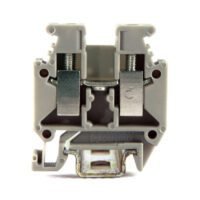
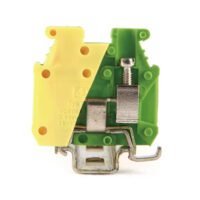
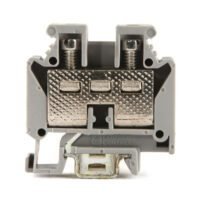
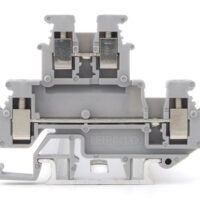
Compare the terminal block ranges by conductor size, current and wiring method.
Which LEIPOLE terminal block type should I choose?
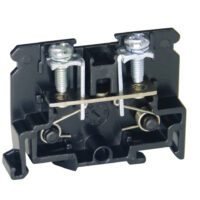
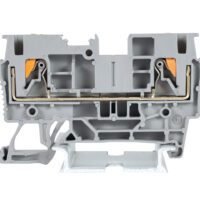
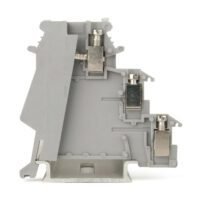
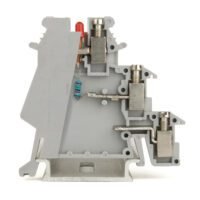
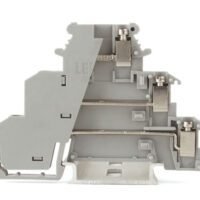
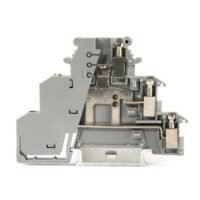
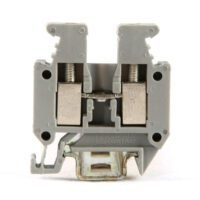
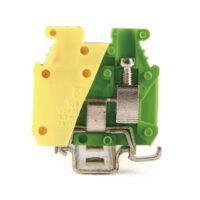
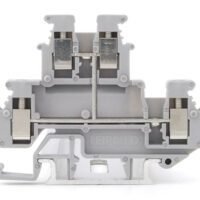
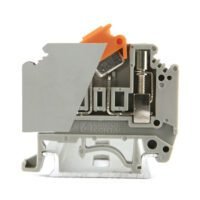
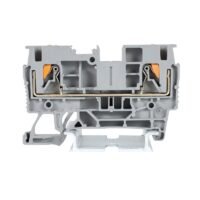
Start with conductor size and current. JUK and JUKH screw blocks take up to 240 mm² at 32 to 415 A and up to 1000 V. JST spring blocks take 0.14 to 10 mm² at 17.5 to 52 A, up to 800 V, and suit vibration and fast wiring. JPT and JPTTB feed-through blocks wire dense rows at 17.5 to 57 A, with two-level JPTTB versions. UN and UD barrier blocks carry 10 to 520 A on conductors up to 325 mm², with molded barriers between poles.
How do power distribution blocks differ from terminal blocks?
A terminal block connects individual conductors; a power distribution block takes one incoming cable and splits it into several outgoing conductors. LEIPOLE UKK power distribution blocks run from 80 A to 500 A with IEC 60947-7-1 ratings, and the UHTT, UKK6G, UKK6N and UKK6NB versions take incoming cables of 10 to 120 mm².
What is a terminal block connector, and what does DIN rail mounting mean?
A terminal block, or terminal block connector, is an insulated block that clamps two or more conductors together so circuits can be joined, tested and changed without splicing. DIN rail terminal blocks clip onto a 35 mm rail to IEC/EN 60715 and are lined up in rows with end plates, end stops and markers. LEIPOLE supplies JUK and JUKH screw, JST spring, JPT feed-through and UN barrier terminal blocks for control panels.
We use essential cookies to run this site. Optional cookies help us understand visits and campaign sources, without cross-site advertising cookies.
Choose cookies & learn more
Essential cookies support forms, security and saved settings. They stay enabled.
Your choice is saved on this device for 180 days. Change it anytime using “Cookie settings” in the footer. Chat and video services load when you open them.