Introduction to the Axial Flow Fan Working Principle
The Axial flow fan working principle is based on airflow moving parallel to the rotating shaft of the fan. Axial fans are widely used in industrial ventilation and thermal management applications because they can deliver large airflow volumes with relatively low pressure. Typical examples include cooling fans used in air conditioners, industrial equipment, data centers, and electrical control cabinets.
Today, axial fans play an essential role in modern data center cooling, automation cooling, and electrical cabinet cooling systems, where stable airflow and efficient heat dissipation are critical for equipment reliability and operational safety.
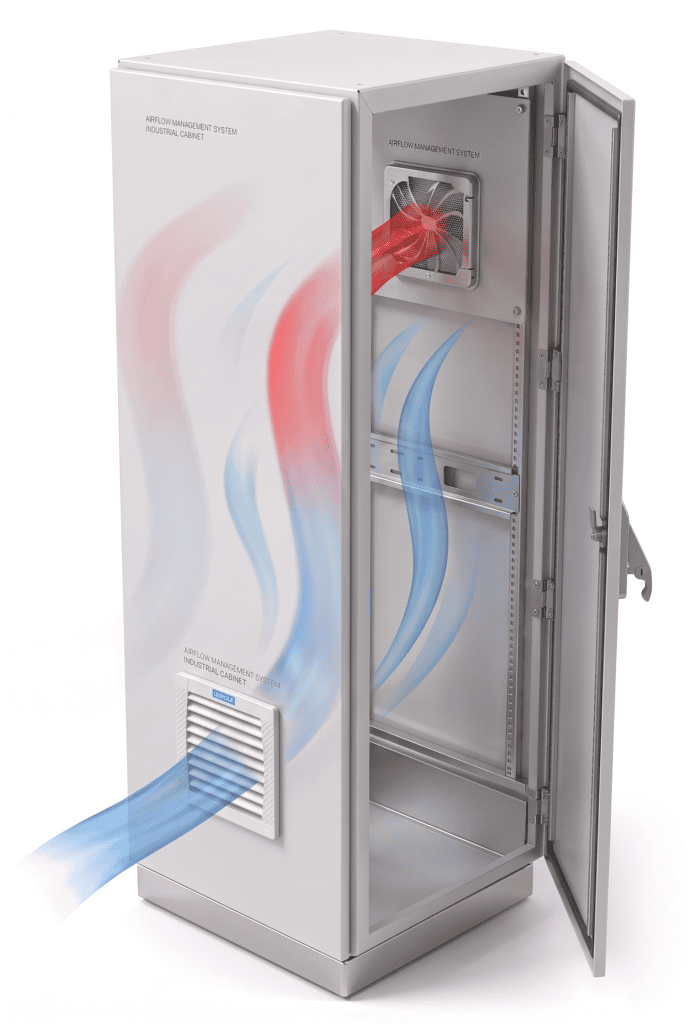
Axial flow fans are commonly integrated into cabinet cooling fans, ventilation units, and filter fans to maintain proper operating temperatures in industrial environments.
Axial Flow Fan Working Principle
The Axial flow fan working principle relies on the rotation of an impeller that forces air to move along the same direction as the fan shaft.
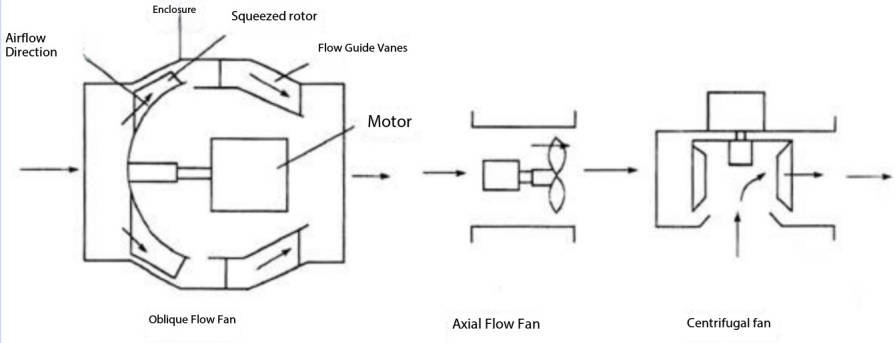
When the impeller rotates, air enters the fan axially through the inlet. The specially designed blades push the air forward, increasing both airflow velocity and pressure. The energized airflow then passes through guide vanes and a diffuser, where airflow direction is stabilized and kinetic energy is partially converted into static pressure energy.
This operating process enables axial fans to provide efficient airflow for cooling and ventilation applications.
The working principle can be divided into four major stages:
1. Axial Air Intake and Energy Increase
After the motor starts, it drives the impeller to rotate at high speed.
Air enters the fan parallel to the shaft direction through the inlet. Due to the aerodynamic airfoil blade design, the blades generate lift and thrust forces similar to aircraft wings. As the air flows across the blades, its kinetic energy and pressure energy increase significantly.
This is the core of the Axial flow fan working principle, allowing axial fans to efficiently move large volumes of air while maintaining compact fan dimensions.
In industrial applications such as automation cooling and electrical cabinet cooling, this airflow helps remove heat generated by PLC systems, drives, transformers, and power electronics.
2. Airflow Straightening and Direction Control
The airflow leaving the impeller is usually turbulent or slightly deflected.
Guide vanes, also known as airflow straighteners, are used to redirect the airflow into a stable axial direction. This reduces turbulence losses and improves airflow efficiency.
In many industrial cabinet cooling fans and filter fans, optimized airflow management is essential to ensure uniform cooling inside electrical enclosures and automation systems.
3. Conversion of Kinetic Energy into Pressure Energy
After passing through the guide vanes, the airflow enters the diffuser section.
The diffuser gradually expands, reducing airflow velocity while converting part of the kinetic energy into static pressure energy. This allows the fan to deliver air more effectively through ventilation ducts, filters, and enclosure systems.
This stage is particularly important in data center cooling applications, where stable airflow distribution and energy-efficient cooling performance are required to protect servers and networking equipment.
4. Air Delivery to the Cooling System
Finally, the accelerated and pressurized airflow is delivered into the ventilation system or working duct.
The airflow removes heat from equipment and transfers it outside the enclosure or facility, completing the cooling cycle.
The Axial flow fan working principle makes axial fans highly suitable for:
- Data center cooling
- Automation cooling
- Electrical cabinet cooling
- Industrial ventilation systems
- HVAC ventilation
- Control panel cooling
- Power distribution cabinet ventilation
Main Components of Axial Fans
Modern axial fans generally include the following core components:
- Impeller — Converts motor power into airflow energy
- Motor — Drives the impeller rotation
- Housing/Casing — Guides airflow and protects internal components
- Guide Vanes — Straighten airflow and improve efficiency
- Air Inlet/Collector — Ensures smooth airflow entry
- Diffuser — Converts airflow velocity into pressure energy
High-quality cabinet cooling fans and filter fans often use optimized blade geometry and low-noise motor technology to improve thermal performance and energy efficiency.
Advantages of Axial Fans in Industrial Cooling
Compared with centrifugal fans, axial fans offer several advantages:
- High airflow volume
- Compact structure
- Easy installation
- Low energy consumption
- Cost-effective cooling solution
- Suitable for confined spaces and electrical enclosures
Because of these advantages, axial fans are widely used in:
- Electrical cabinet cooling
- Industrial automation equipment
- Telecom cabinets
- Energy storage systems
- UPS cooling systems
- Data center cooling
- Manufacturing equipment ventilation
Axial Fans and Filter Fans in Electrical Cabinet Cooling
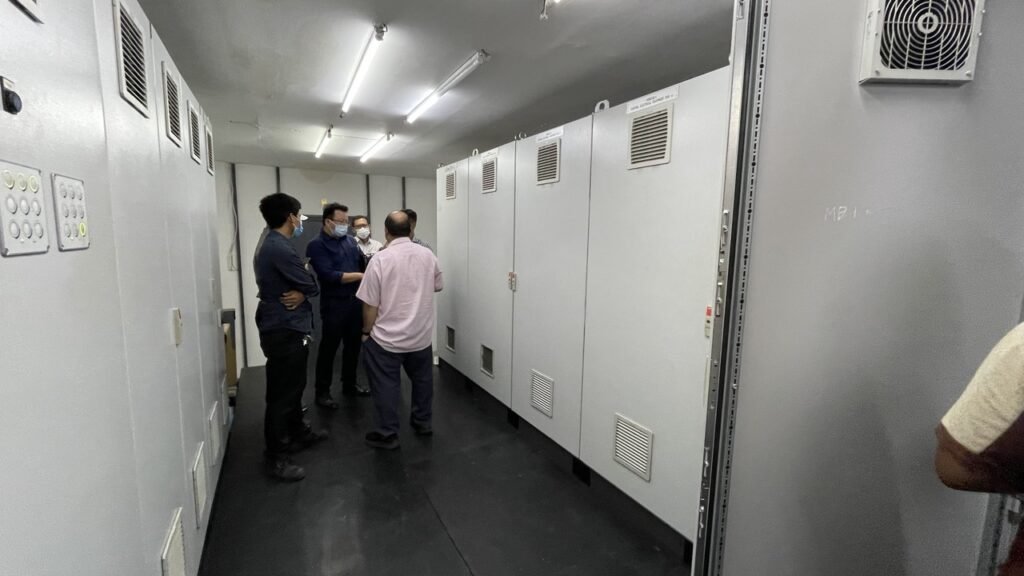
In modern industrial environments, filter fans and cabinet cooling fans are commonly installed in electrical enclosures to maintain safe operating temperatures.
A typical cooling system combines an axial fan with a filter unit. The fan draws cool outside air into the cabinet while the filter prevents dust and contaminants from entering the enclosure.
This solution is widely used for:
- PLC cabinets
- Control panels
- Power distribution cabinets
- Automation systems
- Industrial machinery
- Renewable energy equipment
Efficient electrical cabinet cooling helps improve equipment lifespan, reduce downtime, and maintain stable production operations.