Filter fan maintenance needs a clean-system reference, not just a calendar reminder. Record the fitted media, operating load and temperature difference after commissioning. Compare future observations under similar conditions, and inspect both the inlet and the outlet before concluding that the fan is undersized.
A spinning filter fan confirms rotation; it does not confirm that the enclosure receives enough air. Dust can load a filter, an outlet can become obstructed and replacement media can alter resistance. This filter fan maintenance procedure helps a maintenance team create a useful baseline without inventing a universal replacement interval.
Establish a filter fan maintenance baseline
Start filter fan maintenance with the specified clean media, intact seals and clear openings. Have qualified personnel isolate the equipment before accessing the fan assembly. Record the exact fan and outlet-filter references, supply variant, filter type and the date. Photograph the arrangement so future technicians can see the intended air path.
With the cabinet returned to its normal closed condition, record inlet air temperature, representative internal temperatures and production load. Let the relevant operating cycle establish a stable trend. Keep measurement positions consistent so later readings describe the same locations.
| Maintenance record | Baseline entry | Follow-up entry |
|---|---|---|
| Fan / outlet / media references | Approved configuration | Unchanged or documented replacement |
| Operating condition | Process state and device duty | Comparable load, or explanation of difference |
| Inlet and internal temperatures | Locations, readings and time | Same locations and the observed trend |
| Inlet / outlet condition | Clean, clear and correctly fitted | Dust loading, damage or obstruction |
| Action and verification | Commissioning reference | What changed and whether the baseline returned |
Use filter fan maintenance checks to separate causes
During filter fan maintenance, if the internal temperature rises while ambient and load are similar, inspect the airflow path. If both ambient and internal readings rise together, investigate the operating environment as well. If additional equipment has increased the heat load, cleaning alone may not restore the original margin.
Review the role of static pressure in enclosure cooling when a new filter type or grille changes the air path. A denser substitute should not be assumed equivalent because its outside dimensions fit.
Service the filter fan and outlet as one arrangement
Follow the model’s installation and maintenance instructions for replacing or cleaning media. Do not apply one manufacturer’s cleaning method to a different material. Check seals, clips and the seating of the cover before returning the equipment to operation.
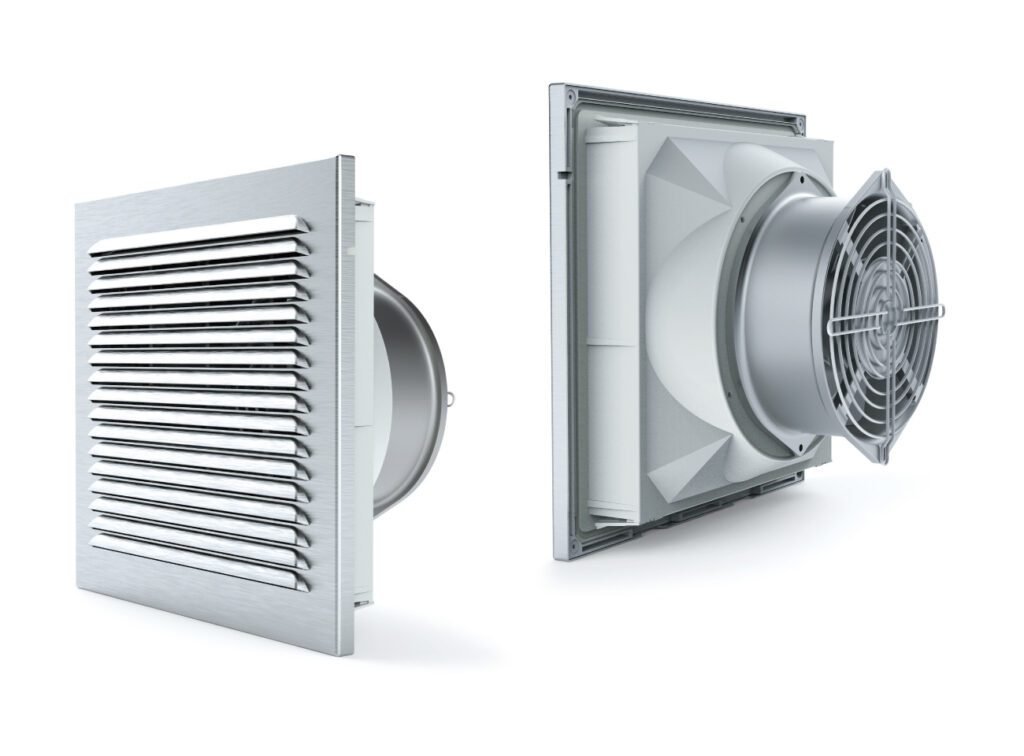
During filter fan maintenance, inspect the exhaust filter as well as the powered inlet. Keep planned access clear: stored materials, cable changes and nearby machinery can obstruct an opening after commissioning. Do not leave media out as a temporary performance improvement; that changes the specified protection arrangement.
Choose a filter fan maintenance trigger from site evidence
Use early filter fan maintenance inspections to learn how quickly the media loads in that environment, then set a documented interval or condition trigger consistent with the manufacturer’s guidance. A clean electronics assembly area and a dusty machining area should not automatically share the same schedule.
Trend the filter fan maintenance observations. If loading accelerates, investigate the source rather than repeatedly shortening the interval without explanation. If temperature remains high after the intended configuration is restored, compare the current duty with the cabinet cooling calculation.
Verify the result after filter fan maintenance
After filter fan maintenance, repeat the reference operating condition and temperature measurements with the door closed. Record whether the system returned to its baseline and whether further action is required. Where direct airflow measurement is part of the procedure, use an appropriate method and document the measurement arrangement; one local air-speed reading is not automatically total volumetric flow.
The useful outcome is a history connecting condition, intervention and performance. That record supports a future resize or replacement decision and helps prevent avoidable emergency substitutions.
Keep the configuration traceable. Find the relevant LEIPOLE filter fan family and confirm replacement media, outlet filters and installation requirements for the exact model.