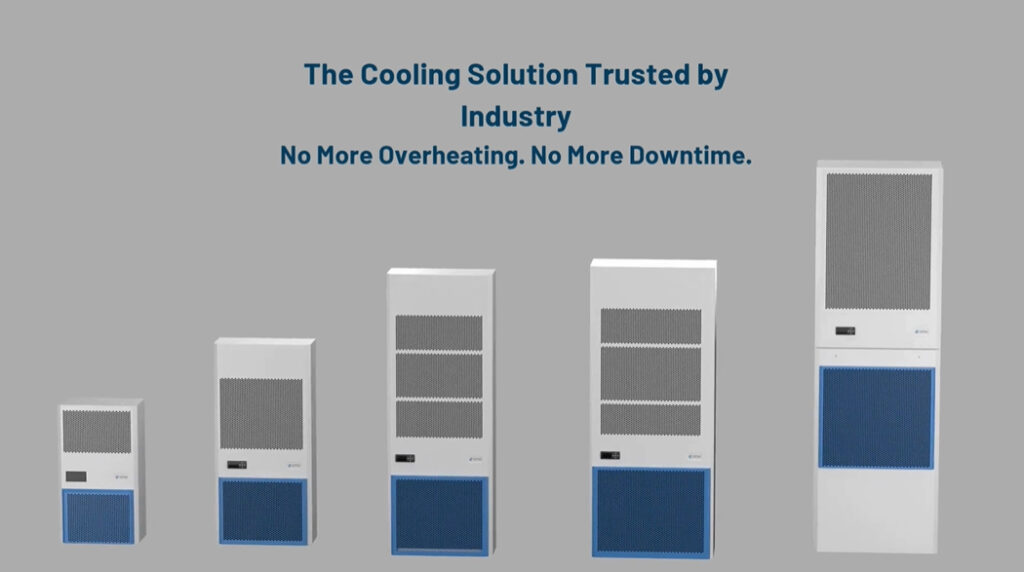
Industrial control panels, drive cabinets, and automation systems house heat-sensitive electronics. As power densities increase, passive ventilation or simple filter fans often fall short of keeping internal temperatures within safe operating limits. Electrical cabinet AC units (also known as enclosure AC units) provide closed-loop thermal protection, sealing out harsh ambient contaminants while actively removing excess heat.
However, an enclosure air conditioner can only perform as well as its installation, airflow design, condensate management, and routine upkeep allow. Improper mounting can destroy protection ratings, poor airflow clearance causes high-pressure trips, and neglected maintenance leads to premature compressor failure.
This comprehensive guide answers the most critical practical questions regarding:
- Installation requirements and mechanical considerations
- Power supply and startup protocols
- External clearance and internal airflow management
- Condensate drainage and cabinet moisture control
- Scheduled maintenance practices
- Systematic troubleshooting for common operational issues
- Long-term replacement and performance optimization
1. Electrical Cabinet AC Installation FAQ
What should I check before installing an electrical cabinet AC unit?
Before beginning any physical work on cabinet air conditioner installation, perform a thorough site and equipment audit:
- Product Model Compatibility: Confirm that the cooling unit’s thermal capacity matches the enclosure heat load calculation.
- Cabinet Structural Capacity: Verify that the cabinet panel or door can support the weight of the air conditioner without warping, sagging, or flexing. Heavy units may require structural reinforcement or frame-mounting.
- Cutout Dimensions & Mounting Surface: Check cutout dimensions and bolt patterns against the template provided by the manufacturer. Ensure the mounting surface is flat, clean, and free of burrs to allow a complete gasket seal.
- Ambient Conditions: Ensure ambient temperatures, humidity levels, and airborne contaminants (dust, oil mist, corrosive gas) remain within the unit’s rated design envelope.
- Service Access & Clearance: Confirm there is adequate physical space around the unit for maintenance access, filter changes, and unrestricted air intake/exhaust.
Can an enclosure AC unit be installed on any cabinet?
No. An enclosure AC unit cannot be mounted indiscriminately on any enclosure. The target cabinet must meet specific mechanical and thermal criteria:
- Structural Strength: Thin sheet-metal doors or unreinforced side panels can buckle under the weight of an industrial cooling unit.
- Sealing Integrity: Enclosure cooling units rely on a closed-loop system. The cabinet must be fully sealed (doors gasketed, cable glands tight, open holes plug-sealed) to prevent ambient moisture and dirt from being drawn into the enclosure.
- Thermal Isolation: Uninsulated metal cabinets exposed to direct sunlight or high radiant heat sources may require heat shields or insulation to ensure the cooling unit operates effectively.
How much clearance does a cabinet air conditioner need?
Clearance requirements vary significantly depending on the air conditioner’s cooling capacity, fan orientation, and physical construction.
As a general rule, both internal and external air inlets and outlets must remain completely unobstructed. Externally, sufficient space is required to prevent recirculation of hot exhaust air back into the condenser intake. Internally, air paths must allow cold supply air to circulate freely across high-heat components without blowing cold air directly onto sensitive sensors or temperature probes.
Note: Always consult the manufacturer’s installation manual for the exact minimum side, front, top, and bottom clearance dimensions specified for your exact model.
Can a cabinet air conditioner be installed horizontally or vertically?
Most standard industrial enclosure air conditioners are designed specifically for vertical mounting (side, door, or wall mount) or top/roof mounting.
Internal components—particularly the compressor lubrication system and condensate management system—rely on gravity to function correctly. Installing a vertical unit horizontally will cause compressor failure due to oil starvation and will lead to severe internal water leakage. Never alter the mounting orientation of a unit unless the manufacturer explicitly approves horizontal or multi-position installation for that specific model series.
Does installing an AC unit affect the cabinet’s IP or NEMA rating?
Yes. Installing an enclosure cooling unit creates cutouts in the cabinet, which inherently risks compromising the enclosure’s ingress protection (IP) or NEMA rating.
To maintain cabinet protection ratings:
- Use the exact gaskets supplied or specified by the manufacturer.
- Apply correct, uniform bolt torque around the entire mounting perimeter.
- Verify that the AC unit itself carries an IP/NEMA rating equal to or higher than the target rating of the cabinet (e.g., IP54, IP55, NEMA 12, NEMA 4, or NEMA 4X).
Important: The installed cabinet’s final protection rating must be evaluated as a complete assembly. The ingress rating of the cooling unit alone does not automatically establish the rating of the overall cabinet if the mounting seal or cabinet modifications are deficient.
2. Electrical Cabinet AC Wiring and Startup FAQ
Safety Notice: Electrical work must be performed by qualified, licensed personnel only. Always isolate and lock out/tag out (LOTO) main power sources prior to opening control panels or executing any wiring, installation, or service.
What power supply does an enclosure AC unit require?
Power requirements depend on the industrial region, cooling capacity, and unit design. Common electrical configurations for electrical cabinet ac units include:
- Single-phase 115V AC (60 Hz)
- Single-phase 230V AC (50/60 Hz)
- Three-phase 400V / 460V AC (50/60 Hz)
- Direct Current (24V DC / 48V DC) for telecom or off-grid enclosures
Always check the unit’s serial nameplate for precise voltage tolerances, rated operating current, and maximum starting current (inrush current).
Should the cabinet AC have a dedicated power supply?
Yes. It is highly recommended to supply power to the cabinet air conditioner through a dedicated branch circuit equipped with proper circuit protection (such as a motor-rated circuit breaker or slow-blow fuse sized for inrush currents).
Connecting an AC unit to shared auxiliary circuits can introduce electrical noise or cause nuisance breaker trips during compressor startup. Always follow local electrical codes (e.g., NEC, IEC) and wire in accordance with the manufacturer’s wiring diagram. Furthermore, ensure protective grounding (earth ground) is properly connected to the unit’s ground lug or terminal.
What should I check before starting a new cabinet AC unit?
Before applying power to a newly installed enclosure AC unit:
- Mechanical Inspection: Verify that all mounting fasteners are tight, gaskets are properly seated, and cutouts are completely sealed.
- Compressor Settlement: If the unit was tilted or transported on its side prior to installation, allow it to stand upright for at least 30 to 60 minutes before applying power so compressor oil can settle.
- Electrical Inspection: Check supply voltage, phase rotation (for three-phase units), ground continuity, and wire termination tightness.
- Airflow Paths: Confirm that external shipping covers, protective films, and packing materials are removed from air intakes and outlets.
- Condensate Connection: Verify that drain lines or evaporation systems are correctly installed and unobstructed.
3. Condensate Drainage and Moisture Control FAQ
Why does an electrical cabinet air conditioner produce condensate?
Condensate is a natural byproduct of active refrigeration. When warm, humid air inside or outside the cabinet passes across the cold evaporator coil, the air temperature drops below its dew point. Moisture dissolved in the air condenses into liquid water drops on the heat-exchanger fins.
Does every enclosure AC unit need a drain hose?
Not necessarily. The required drainage setup depends entirely on the design of the enclosure ac units:
- External Drain Hoses: Standard units collect condensate in an internal collector tray and discharge it via gravity through a bottom drain hose routed outside the cabinet.
- Integrated Condensate Evaporators: Many modern industrial cabinet air conditioners feature built-in electrical heating elements or hot-gas re-evaporation circuits that vaporize condensate and blow it harmlessly into the external air stream, eliminating the need for a drain hose under normal operating conditions.
Never assume every unit requires the same drain arrangement; always refer to the specific model’s installation guidelines.
Moisture Sources in Air Conditioners
| Moisture Source | Contributing Mechanism | Potential Impact | Prevention & Remedy |
| Cabinet Unsealed | Warm, humid ambient air continuously enters through gaps or cable entries | Heavy condensation forms rapidly on cold evaporator coils | Seal all cable glands, conduit openings, and door gaskets |
| Door Left Open | Ambient moisture floods the enclosure interior during maintenance | Water pooling inside cabinet and component exposure | Install door limit switches to shut down AC when doors open |
| Blocked Drainage | Dust, biological growth, or kinks blocking the drain hose or tray | Water overflows directly into the electrical compartment | Regularly flush drain lines and verify correct gravity slope |
How can I prevent condensate from damaging the cabinet?
To prevent moisture-related electrical damage:
- Maintain Cabinet Sealing: Ensure door gaskets, cable entry glands, and conduit entries are air-tight. Moisture generation is minimal in a properly sealed cabinet.
- Door Limit Switches: Install a door switch that automatically turns off the air conditioner when the cabinet door is opened, preventing rapid ambient moisture ingress.
- Inspect Drain Pathways: Ensure gravity drain hoses maintain a continuous downward slope without kinks, traps, or blockages.
- Set Appropriate Thermostats: Do not set the cooling setpoint excessively low. Setting target temperatures well below ambient dew points increases condensation risk. A recommended internal target temperature is typically around 30°C to 35°C (86°F–95°F).
Why is there water inside my electrical cabinet?
Water accumulation inside an electrical cabinet is a sign of operational failure or improper setup. Primary causes include:
- Unsealed Enclosure: Warm ambient air constant leaking into the cabinet creates continuous high condensate volume that overloads the drainage system.
- Clogged Condensate Drain: Dust, dirt, or algae blocking the drain tray outlet causes water to overflow directly into the electrical compartment.
- Damaged Internal Baffles/Gaskets: Internal seals separating the cold evaporator side from the hot condenser side may be damaged, allowing condensed water to escape into the enclosure.
- Frozen Evaporator Coil: Ice buildup melting rapidly after a compressor cycle can overflow internal trays.
4. Electrical Cabinet AC Maintenance FAQ
How often should I maintain an electrical cabinet AC unit?
There is no single universal maintenance interval that fits every application. Maintenance frequency depends on operating hours, ambient dust levels, atmospheric oil/chemical contamination, and operating temperature extremes.
| Environment | Example Industry | Suggested Inspection Interval | Key Focus |
| Clean / Climate-Controlled | Electronics, Pharma, Cleanrooms | Every 6 to 12 months | Filter check, electrical check, general cleaning |
| Moderate Industrial | Assembly, Packaging, Warehousing | Every 3 months | Filter cleaning/replacement, condensate check |
| Harsh / Severe Ambient | Foundries, Paper Mills, Cement, Outdoor | Monthly or Bi-weekly | Filterless coil inspection, heavy cleaning, gasket check |
How do I clean an enclosure air conditioner?
Routine cabinet air conditioner cleaning focuses on maintaining unobstructed thermal transfer:
- Filter Maintenance: Remove filter mats (aluminum, foam, or paper) from the external condenser intake. Clean reusable metal/foam filters with mild detergent or compressed air; replace disposable paper filters.
- Condenser Coil Cleaning: Clean external heat exchanger fins using compressed air (blowing from the clean side out) or soft brushes. Avoid bending soft aluminum fins.
- Air Intakes and Outlets: Clear away accumulated dust, shop lint, or debris blocking external louvers and fans.
- Condensate Trays and Lines: Flush internal drain trays and hoses with warm water to clear sediment, bio-film, or dirt.
Can I clean the condenser or evaporator myself?
Plant maintenance technicians can perform routine external cleaning, filter washing, and surface inspections. However, internal evaporator coil cleaning, sealed refrigeration circuit diagnostics, or refrigerant recharging must be performed by qualified HVAC/R technicians using appropriate recovery equipment and safety procedures.
Why is regular maintenance important?
Neglecting enclosure air conditioner maintenance leads directly to:
- High head pressure and thermal overload trips
- Reduced cooling performance, resulting in high cabinet temperatures and equipment downtime
- Increased energy consumption as compressors run continuously
- Reduced operational lifespan of fan motors and hermetic compressors
5. Enclosure AC Units Troubleshooting FAQ
When conducting electrical cabinet AC troubleshooting, follow a systematic process.
Note: The diagnostic steps below represent initial safe visual and operational checks. They do not imply a single component failure, nor should uncertified personnel attempt internal electrical or refrigerant repairs.
| Symptom | Possible Causes | Safe Initial Checks | When to Seek Professional Service |
| Unit not cooling | – No power supply – High internal setpoint – Dirty condenser coil / blocked air path – Refrigerant leak or compressor failure | – Check main breaker and power LED indicator – Verify thermostat / controller setpoint – Visually inspect coils and filters | Contact a certified service technician if power is normal but cooling fails or refrigerant leaks are suspected. |
| Unit keeps running continuously | – Cabinet heat load exceeds AC capacity – Cabinet door open / poor door seals – Thermostat setpoint too low | – Calculate component heat losses – Inspect door gaskets and enclosure holes – Adjust temperature setpoint to 30–35°C | Contact service support if sealing is intact and heat loads are within rating but unit never cycles off. |
| Leaking water | – Blocked condensate drain line – Cabinet unsealed, drawing high humidity – Unit mounted out of level | – Inspect drain hose for kinks or clogs – Check door gaskets and cable entry glands – Check enclosure levelness with spirit level | Contact service personnel if internal evaporator baffles or condensate pans are damaged. |
| Unusual noise or vibration | – Loose mounting bolts or sheet metal – Fan blade obstruction or worn bearings – Compressor mounting grommets worn | – Tighten external mounting hardware – Inspect fan blades for debris or play | Contact a qualified technician if noise originates from internal fan bearings or the compressor. |
| Cabinet remains hot while AC is running | – Internal cabinet air recirculation – AC unit undersized for heat load – Internal fan failure | – Rearrange internal components for airflow – Re-evaluate total enclosure heat load – Check if internal evaporator fan is spinning | Consult engineering support for thermal sizing upgrades or internal airflow redesigns. |
| Unit repeatedly stops and restarts (short-cycling) | – High pressure cut-out due to dirt – Ambient temperature exceeds rating – Voltage fluctuations | – Clean condenser fins and air filters – Measure external ambient temperature – Measure supply line voltage under load | Contact a service technician if high-pressure switches trip repeatedly after coil cleaning. |
| Condensation inside enclosure | – Cabinet leaky / unsealed – Cold air blowing directly on metal walls | – Seal open cable conduits and door gaps – Adjust deflectors to direct air into center | Consult technical support if insulation or internal ducting is damaged. |
When should I replace an enclosure AC unit?
Consider unit replacement over repair when:
- The unit uses obsolete, restricted refrigerants (e.g., legacy HCFCs).
- The compressor has suffered major mechanical failure after 8–10+ years of severe continuous service.
- Internal coils are severely corroded due to chemical exposure.
- The enclosure heat load has increased beyond the unit’s maximum physical cooling capacity.
6. How to Improve the Reliability of Electrical Cabinet AC Units
To maximize the longevity and thermal efficiency of your industrial enclosure cooling equipment:
- Keep Airflow Paths Clear: Ensure both internal evaporator circulation and external condenser exhaust have adequate clearance. Never block internal fan outlets with wire ducting or high components.
- Maintain Enclosure Sealing Integrity: Treat the electrical cabinet as a sealed vault. Replace damaged door seals, cap unused conduit holes, and install cable gland seals.
- Monitor Cabinet Temperature: Install digital temperature displays or IoT monitoring modules to track enclosure internal temperatures continuously and trigger early warning alarms.
- Maintain Up-to-Date Maintenance Records: Document filter cleanings, coil inspections, ambient temperatures, and operating currents to identify performance degradation trends early.
- Address Alarms Promptly: Never ignore short-cycling or thermal alarms. Investigate pressure trips immediately to avoid damaging the compressor winding.
- Size Correctly: Always perform a proper thermal load calculation. For details on calculating thermal requirements, read our guide on How to Size a Cabinet Air Conditioner. If choosing between different cooling methods, consult our comparison on Industrial Aircon vs Vortex Cooler.
7. Short FAQ Summary
What is an electrical cabinet AC unit?
An electrical cabinet AC unit is a closed-loop refrigeration system designed specifically to cool and dehumidify sealed electrical enclosures and industrial control cabinets without introducing ambient dust, moisture, or contaminants.
Does an enclosure AC unit need condensate drainage?
Yes, all active cooling units generate moisture during operation. Depending on model features, this moisture is managed via an external gravity drain hose or an integrated electrical condensate evaporator system.
How often should a cabinet air conditioner be maintained?
Maintenance schedules depend on environment severity. Clean rooms require inspection every 6 to 12 months, standard industrial plants every 3 months, and dusty or harsh environments require monthly checks.
Why is my electrical cabinet AC not cooling?
Common causes include power interruption, incorrect thermostat settings, clogged condenser coils or filters, blocked airflow paths, or internal refrigerant loss.
Can I install a cabinet AC unit myself?
Mechanical mounting and basic filter care can be performed by trained maintenance personnel. Electrical connections must be handled by qualified electricians, and sealed refrigerant repairs require certified HVAC/R specialists.
Does an enclosure AC unit maintain the cabinet’s IP rating?
Yes, provided the cooling unit matches or exceeds the required IP/NEMA rating, is correctly mounted using factory gaskets, and the complete cabinet assembly is properly sealed.
Conclusion
Protecting sensitive drive controllers, PLCs, and power electronics requires more than just buying a cooling unit—it requires precise installation, active condensate management, and proactive maintenance. Unrestricted internal and external airflow, verified electrical connections, and scheduled heat-exchanger cleanings ensure stable cabinet temperatures and long equipment service life.
Always consult your product’s specific user manual and serial nameplate for exact installation templates, power requirements, and maintenance procedures.
Need Expert Guidance on Industrial Enclosure Cooling?
Looking for reliable, energy-efficient cooling solutions for your control panels or automation cabinets? Explore the full range of climate control systems at LEIPOLE, or contact our technical engineering team today to request product specifications, sizing support, and customized thermal management advice.