1. Introduction
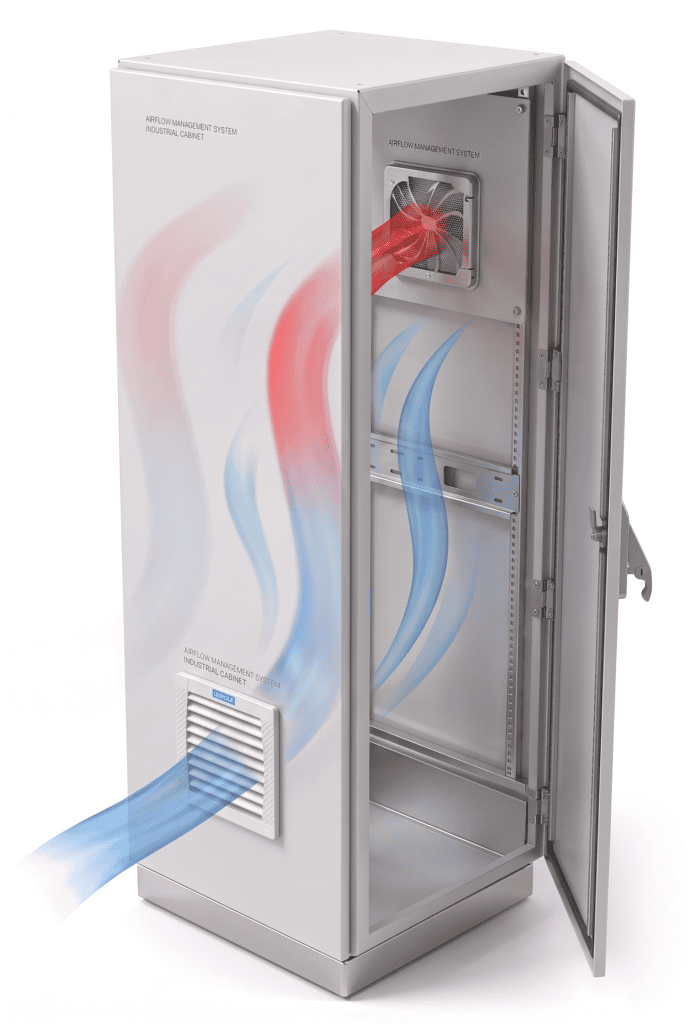
In modern manufacturing and industrial automation, electrical enclosures house increasingly dense and sophisticated components. As these components operate, they generate significant heat. If this heat is not properly managed, it can lead to catastrophic equipment failure, costly production downtime, and safety hazards.
Proper cabinet air conditioner sizing is one of the most critical steps in control panel design. Getting it right ensures that your electronics remain within their optimal operating temperature range, maximizing their lifespan and reliability. This comprehensive guide will walk you through the precise steps required to calculate your electrical cabinet cooling capacity, convert your heat load into BTUs, and ultimately select the perfect electrical cabinet air conditioner for your application.
2. What Is a Cabinet Air Conditioner?
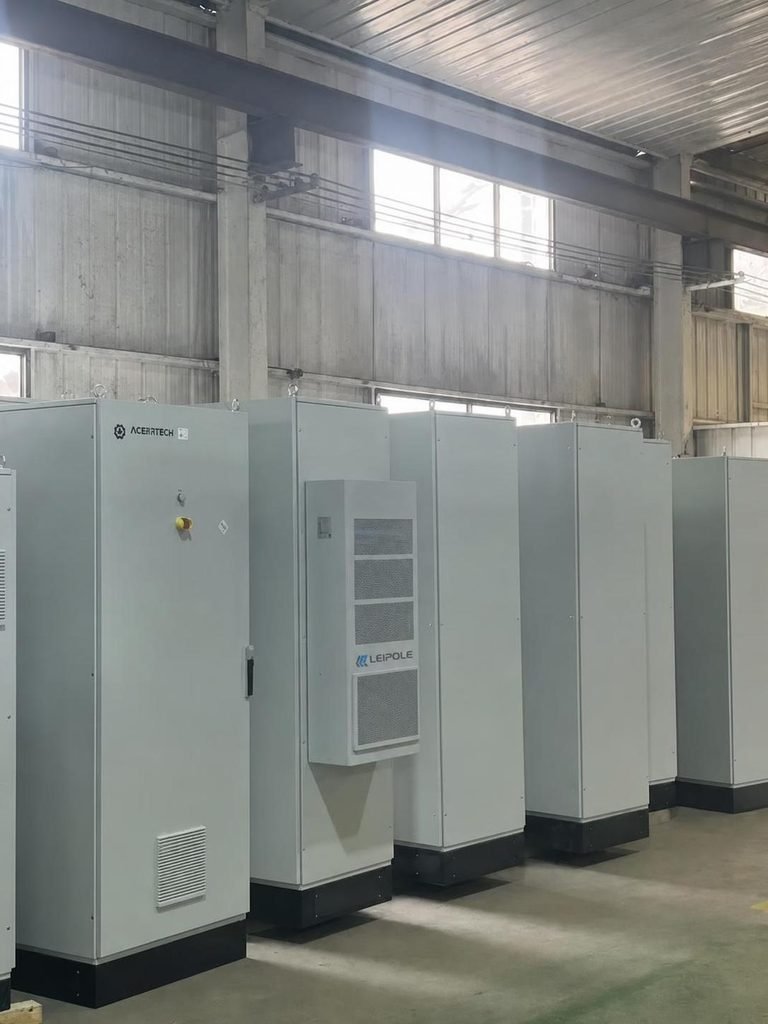
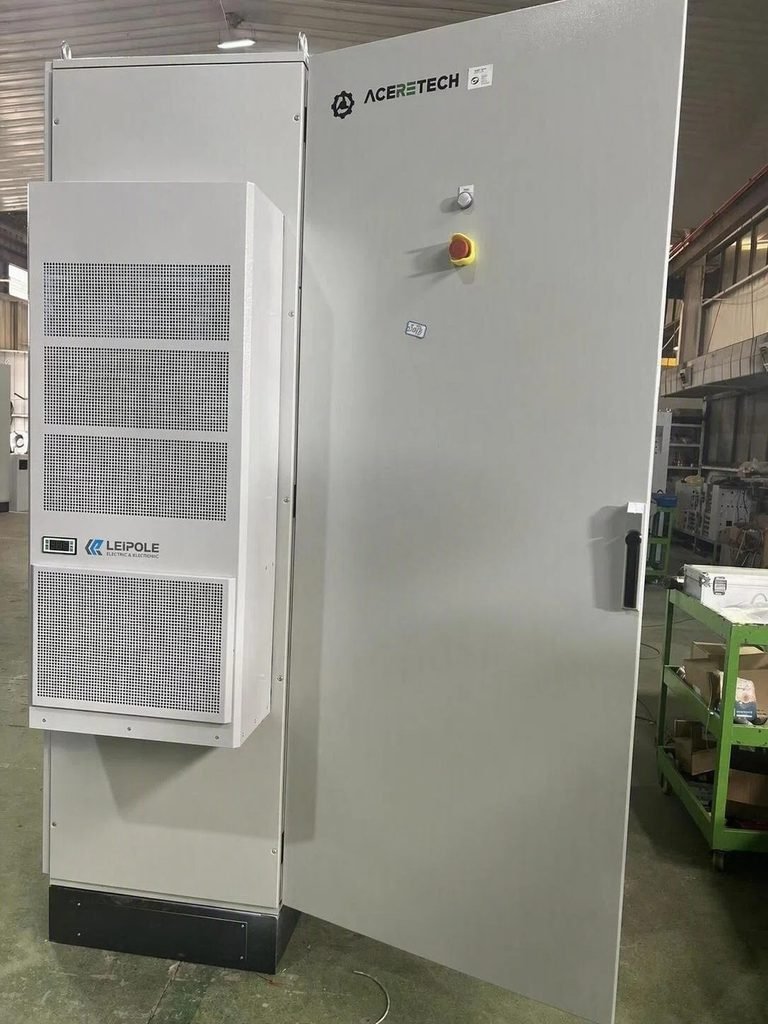
An electrical cabinet air conditioner (often referred to as an enclosure AC or panel AC) is a purpose-built, closed-loop cooling system designed specifically for industrial enclosures. Unlike standard residential or commercial HVAC units, a cabinet AC unit cools the internal air of the electrical panel without introducing outside air.
This closed-loop system is vital for industrial cabinet cooling because it prevents ambient dust, moisture, corrosive airborne chemicals, and other contaminants from entering the enclosure, thereby maintaining the cabinet’s NEMA or IP integrity rating.
3. Why Proper Cabinet Air Conditioner Sizing Matters
When it comes to cabinet AC sizing, precision is paramount. Guessing the required capacity leads to two common, yet equally damaging, scenarios:
- Undersizing: An undersized electrical enclosure air conditioner will run constantly but fail to reach the target internal temperature. This leads to component overheating, nuisance tripping of breakers, premature failure of variable frequency drives (VFDs), and drastically shortened equipment lifespans.
- Oversizing: More cooling capacity is not always better. An oversized cabinet AC unit will cool the air too rapidly and “short cycle” (turn on and off too frequently). Because it doesn’t run long enough to dehumidify the air, condensation can build up inside the panel. Short cycling also puts excessive wear on the AC compressor and wastes energy.
4. What Determines Required Cabinet Cooling Capacity?
An accurate enclosure air conditioner calculation cannot rely on internal heat alone. To properly size an electrical cabinet air conditioner, you must factor in all of the following variables:
- Internal heat load: The total heat dissipated by all active electrical components inside the enclosure.
- Ambient temperature: The maximum external temperature of the air surrounding the cabinet in its operating facility.
- Required internal cabinet temperature: The target maximum temperature you want to maintain inside the panel (typically dictated by the most heat-sensitive component, usually around 90°F to 95°F / 32°C to 35°C).
- Cabinet size and surface area: The physical dimensions (Height, Width, Depth) of the enclosure, which dictate how much surface area is exposed to the ambient environment.
- Enclosure construction: The material the cabinet is made from (e.g., carbon steel, stainless steel, aluminum, fiberglass, or polycarbonate).
- Heat transfer through the enclosure: How much external heat is absorbed into the cabinet (if ambient is hotter than internal) or lost to the environment (if internal is hotter than ambient).
- Operating environment: Environmental factors such as direct solar radiation (sunload) if installed outdoors, or proximity to blast furnaces in a steel mill.
5. How to Calculate Electrical Cabinet Heat Load
To determine the electrical cabinet cooling capacity needed, you must first calculate the internal heat load. Electrical components are not 100% efficient; they lose a portion of the electrical energy they consume as heat.
Common heat-generating components include:
- PLCs (Programmable Logic Controllers)
- VFDs (Variable Frequency Drives)
- Power supplies
- Transformers
- Relays
- Contactors
- Drives (Servo and stepper)
- Power electronics and solid-state devices
Crucial Sizing Rule:
The heat load should always be based on the actual power dissipation or heat-loss data provided by the component manufacturers. Do not automatically treat the total electrical input power (nameplate wattage) as heat.
For example, a VFD might control a 10,000 W motor, but the drive itself operates at about 97% efficiency. The actual heat dissipation inside the cabinet is only the 3% loss (300 W), not the full 10,000 W.
To calculate total internal heat load, gather the datasheets for all components inside the panel, locate the “Heat Dissipation” or “Power Loss” value (in Watts), and sum them together.
6. How to Convert Watts to BTU/h
In many regions, especially North America, control cabinet air conditioner capacity is measured in British Thermal Units per hour (BTU/h). However, electrical heat dissipation is universally calculated in Watts (W).
To find your required cabinet air conditioner BTU, you must convert your calculated Watts using the standard conversion factor:
1 W ≈ 3.412 BTU/h
The formula is straightforward:
Cooling Capacity (BTU/h) = Heat Load (W) × 3.412
7. Cabinet Air Conditioner Sizing Example
Let’s walk through a realistic enclosure air conditioner calculation.
Parameters:
- Total Internal Heat Load: 1,200 W (calculated from component datasheets)
- Target Internal Temperature: 90°F
- Maximum Ambient Temperature: 110°F
- Cabinet Dimensions: 72” High x 36” Wide x 24” Deep
- Cabinet Material: Painted Steel
- Installation: Indoor, against a wall (front, top, two sides, and bottom exposed)
Note: A full thermodynamic calculation requires calculating the exposed surface area and the heat transfer coefficient of the steel cabinet based on the 20°F temperature differential (110°F – 90°F).
For this example, let’s assume the heat transfer calculation reveals that the hot ambient air radiating through the steel cabinet walls adds an additional 250 W of heat load to the inside of the cabinet.
- Total Heat Load: 1,200 W (internal) + 250 W (external transfer) = 1,450 Watts.
- Convert to BTU/h: 1,450 W × 3.412 = 4,947.4 BTU/h
8. How Much Safety Margin Should You Add?
In control panel cooling, you rarely want to select a unit that exactly matches your calculation to the single decimal point. It is standard engineering practice to add a safety margin of 10% to 25% to your final BTU calculation.
This margin accounts for:
- Future additions of components to the panel.
- Unexpected spikes in ambient facility temperatures (e.g., a broken facility AC system or extreme summer heatwaves).
- Gradual decrease in cooling efficiency due to dust buildup on the condenser filter over time.
Adding a 15% safety margin to our previous example (4,947.4 × 1.15) gives a required capacity of 5,689 BTU/h.
9. Cabinet AC vs Fan Filter vs Heat Exchanger
Before finalizing a cabinet AC unit, verify that active refrigeration is actually required.
- Filter Fans: Use only when the ambient temperature is always consistently lower than the required internal cabinet temperature, and the environment is relatively clean.
- Air-to-Air Heat Exchangers: Use when ambient temperature is lower than internal temperature, but a closed-loop system is required to protect against dust and moisture.
- Cabinet Air Conditioner: Required when the ambient temperature is equal to or higher than the required internal temperature, or when precise temperature and humidity control is necessary.
10. How to Choose the Right Cabinet AC Unit
IMPORTANT: Do not present your calculated BTU/h as automatically equal to the final selected air conditioner model’s nominal rating.
If your calculation dictates you need 5,689 BTU/h, you cannot simply buy an air conditioner that says “6,000 BTU” on the box without further investigation. The final selection must also consider:
- Actual Ambient Temperature & Performance Curves: Air conditioners are rated at a specific ambient temperature (e.g., 95°F/95°F test conditions). If your facility reaches 110°F, the compressor works harder, and the actual cooling output of a “6,000 BTU” unit might drop to 5,000 BTU. You must plot your required capacity against the manufacturer’s performance/rating curve at your actual maximum ambient temperature.
- Voltage and Phasing: Ensure the AC unit matches available power (e.g., 115V, 230V, or 460V / 1-phase vs. 3-phase).
- Mounting Style: Determine if you need side-mount, roof-mount, or door-mount configurations based on facility footprint constraints.
- NEMA/IP Ratings: Ensure the AC unit maintains the panel’s rating (e.g., NEMA 12 for indoor dust, NEMA 4 for indoor/outdoor washdown, NEMA 4X for corrosion resistance).
11. Cabinet AC Selection Checklist
Use this checklist when finalizing your electrical cabinet air conditioner:
- [ ] Have you calculated internal watts using component heat dissipation datasheets (not input power)?
- [ ] Have you calculated heat transfer through the cabinet walls based on max ambient temp?
- [ ] Did you convert total Watts to BTU/h (x 3.412)?
- [ ] Did you add a 10-25% safety margin?
- [ ] Did you verify the AC’s cooling capacity at your actual maximum ambient temperature using the manufacturer’s performance curve?
- [ ] Does the NEMA/IP rating match the enclosure?
- [ ] Is the physical size compatible with your enclosure doors/walls?
12. Common Cabinet Air Conditioner Sizing Mistakes
- Using Input Power as Heat Load: Automatically assuming a 500W power supply dissipates 500W of heat will result in massively oversized AC units.
- Ignoring Solar Heat Gain: If the cabinet is outdoors, the sun radiating on a metal box can easily double the required electrical cabinet cooling capacity.
- Overlooking the Cooling Curve: Buying a nominal 4,000 BTU/h unit for a 130°F environment, only to find out it derates to 2,500 BTU/h at that extreme temperature.
13. Practical Selection Example
Returning to our previous example, we calculated a requirement of 5,689 BTU/h operating in a 110°F ambient environment.
You look at a manufacturer’s catalog and find a cabinet AC unit nominally rated for 6,000 BTU/h. However, looking at the technical data sheet’s performance curve, you see that at 110°F ambient, the cooling rate drops to 5,200 BTU/h.
Because 5,200 BTU/h is lower than your required 5,689 BTU/h, this model will be undersized during peak summer hours. You must step up to the next available size—perhaps a nominal 8,000 BTU/h unit—which, according to its curve, provides exactly 6,500 BTU/h at 110°F. This perfectly satisfies your required heat load plus your safety margin.
14. FAQ
Q: Can I just use a standard window AC unit for my electrical cabinet?
A: No. Window AC units are not closed-loop, meaning they will pump dirt, dust, and moisture directly into your sensitive electronics. They also lack the industrial ruggedness and NEMA ratings required for industrial cabinet cooling.
Q: What happens if water is leaking from my cabinet air conditioner?
A: This usually means the AC is oversized (causing short cycling and excess condensation), the enclosure door is left open, or the cabinet seals are broken, allowing ambient humidity to constantly enter the panel.
Q: How do I convert BTU/h back to Watts?
A: Simply divide your BTU/h figure by 3.412. For example, a 10,000 BTU/h air conditioner provides approximately 2,930 Watts of cooling.
15. Conclusion
Properly sizing an electrical cabinet air conditioner requires more than guesswork; it demands a calculated approach factoring in component heat dissipation, ambient extremes, and enclosure thermodynamics. By taking the time to accurately perform an enclosure air conditioner calculation and consulting manufacturer performance curves, you protect your vital industrial electronics from heat-induced failure.
Taking these steps ensures you select a cabinet AC unit that optimizes your control panel cooling, guards your operational uptime, and provides a maximum return on your equipment investment.