A cabinet that overheats does not automatically need replacing. A useful enclosure cooling retrofit starts by separating four causes: increased heat loss, hotter inlet air, restricted airflow and deteriorated equipment. Record what changed in the enclosure cooling arrangement before ordering a larger fan.
An added drive, a rearranged production line or a new filter specification can change the conditions inside a control panel. The cabinet may still be structurally sound. The practical question is whether its cooling system can support today’s equipment, at today’s ambient temperature, with the doors closed.
This guide is for maintenance managers and panel builders reviewing an existing installation. It complements the enclosure cooling fundamentals with an enclosure cooling decision process for retaining useful equipment and replacing only what the evidence supports.
Start an enclosure cooling retrofit with the change history
Compare the original enclosure cooling design conditions with current operation. List added devices, changed drive duty, nearby heat sources, blocked service clearances and filter substitutions. Use component heat-loss figures at the actual operating point. A motor’s output rating is not the heat dissipated by its inverter inside the enclosure.
For cabinet cooling, record the inlet air temperature and the hottest relevant internal location during the production cycle that causes the complaint. Comparing a lightly loaded morning measurement with a fully loaded afternoon measurement can make an unchanged cooling system appear inconsistent.
| What changed? | Evidence to collect | First decision |
|---|---|---|
| More equipment or a higher duty cycle | Updated component losses and operating hours | Recalculate the required airflow |
| Cabinet moved beside another enclosure | Accessible surfaces, inlet and outlet clearances | Review heat-transfer area and the air path |
| Temperature rose after filter replacement | Old and new media specifications; outlet filter condition | Verify the complete filter arrangement |
| Room or outdoor conditions became hotter | Worst expected temperature at the inlet | Confirm that ambient-air cooling is still feasible |
Keep the enclosure cooling system when maintenance restores its baseline
A dirty outlet, obstructed intake or damaged fan can explain a loss of performance without implying that the original sizing was wrong. Have qualified personnel isolate equipment before accessing fans or filters. Restore the specified media, seals and clearances in the enclosure cooling system, then repeat the measurement under comparable load.
If the enclosure cooling system returns to its documented temperature baseline, replacing the entire cabinet may add cost without solving a separate problem. Record the intervention and establish an inspection trigger. Avoid an arbitrary universal filter-change interval: dust loading and operating hours differ between sites.
Resize cabinet cooling around the revised heat load
Use the LEIPOLE cabinet cooling fan calculator to compare the original and revised conditions. Preserve both sets of cabinet cooling inputs. The enclosure cooling arrangement matters because a cabinet against a wall or in the middle of a row has a different effective heat-dissipating area.
The tool’s original example uses a 2 × 0.8 × 0.6 m standalone painted-steel enclosure, 450 W of component losses, 35 °C ambient and a 40 °C target. It returns about 182 m³/h. That number is a sizing result, not permission to substitute any fan with a similar free-air rating. Check the installed fan, filter and outlet combination.
Know when an enclosure cooling retrofit needs active cooling
If inlet air is at or above the required internal temperature, adding ventilation cannot create colder air. Schneider Electric distinguishes forced ventilation for cooler ambient conditions from cooling-unit applications. See Schneider Electric’s thermal management overview.
Review enclosure air conditioners when the temperature requirement or contamination conditions call for a closed cooling circuit. Check capacity at the specified ambient and internal temperatures, condensate arrangements and service access. A refrigerating unit should be selected for the installation, not simply for the largest headline capacity.
Make the retrofit approval measurable
Agree on enclosure cooling acceptance conditions before the work: production load, inlet temperature, measurement locations, operating limits and the duration needed to reach a stable trend. Retain the cabinet drawing and the final model information. Document the test with the doors closed and the intended filters fitted.
A useful enclosure cooling retrofit ends with an updated record that the next technician can understand. Keep the calculation, selected product, maintenance baseline and responsibility for follow-up in one place.
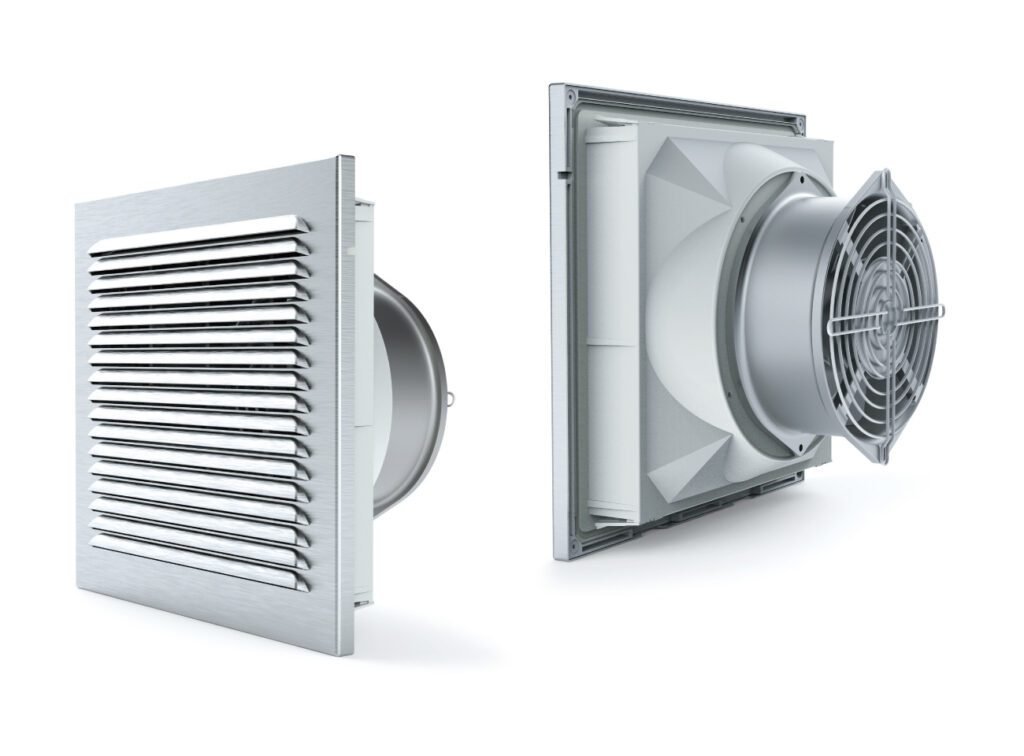
Build a focused shortlist. Compare LEIPOLE filter fans for filtered ventilation, then save the calculator inputs and discuss the retrofit requirements with LEIPOLE.