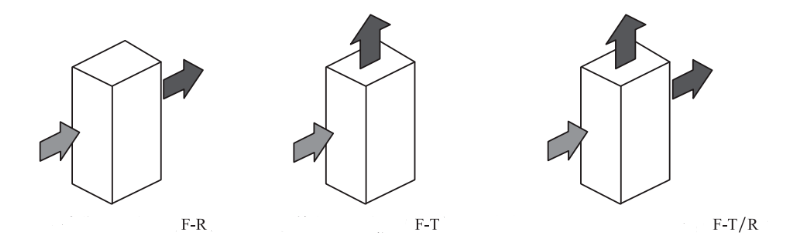
Electronic information equipment generally uses three main airflow configurations, as illustrated in Figure . The F-R configuration (front-to-rear airflow) is the most widely used airflow pattern in modern electronic equipment and represents the typical intake and exhaust design for servers. In this setup, cool air enters through the front of the server and hot air is discharged from the rear. This airflow pattern is also the easiest to manage from a data center cooling perspective and is commonly used in both cold-aisle and hot-aisle containment designs.
The F-T (front-to-top) and F-T/R (front-to-top/rear) airflow configurations are more typical of transmission equipment, such as network switches. The latter is especially common in telecommunications transmission rooms operated by carriers. However, these airflow arrangements make cooling system implementation more challenging, as they tend to increase the risk of hot and cold air mixing.
Early Data Center Cooling Methods: Air Hood Supply Systems
In the early days of data centers, most facilities were operated by telecommunications carriers. Electronic equipment generated relatively small amounts of heat, and the overall power density of a 42U rack was typically below 2 kW per cabinet.
Because the heat load was modest, the earliest data center cooling approach relied on the air-hood supply method.
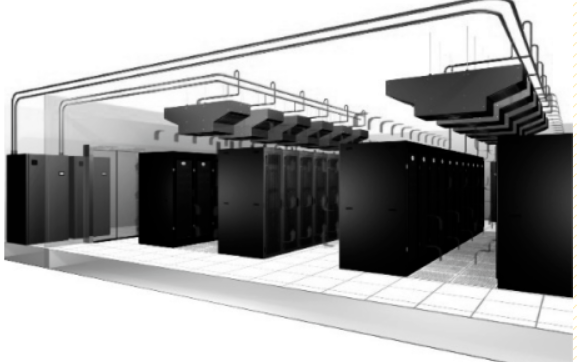
This system delivered cooled air through overhead outlets positioned above equipment areas. Even today, this traditional airflow configuration can still be found in older telecom facilities.
However, this design was largely adapted from conventional commercial HVAC systems rather than purpose-built data center cooling solutions. As a result, the airflow supply distance was relatively limited.
Under conditions where the external static pressure of the cooling system reached 200 Pa, the air supply distance was typically limited to around 15 meters.
While this approach worked well for early low-density environments, it quickly became insufficient as server heat output increased.
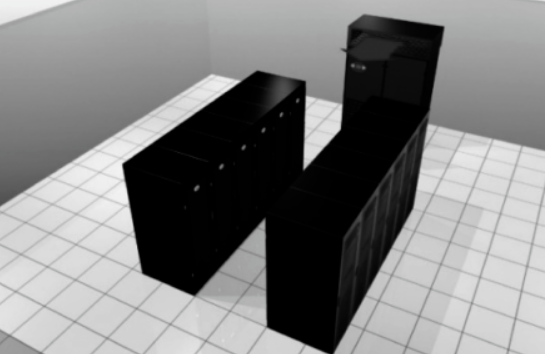
Raised Floor Air Supply: The Classic Data Center Cooling Architecture
As information technology advanced, equipment integration increased and heat generation rose significantly. Rack power density soon reached 3–5 kW per cabinet.
At this stage, traditional air-hood systems began to create localized hot spots inside data centers. To address this challenge, the raised floor air supply system became the dominant data center cooling architecture.
In this design:
- The space beneath the raised floor functions as a static pressure plenum for distributing cold air.
- The same space is also used for cable routing and infrastructure management.
When underfloor airflow is combined with cable installation, the plenum height should generally not be less than 500 mm. In addition, the overall data center ceiling height should exceed 3,000 mm to maintain effective airflow distribution.
For many years, raised floor air supply remained the standard configuration for data center cooling systems, and it is still widely used in facilities around the world.
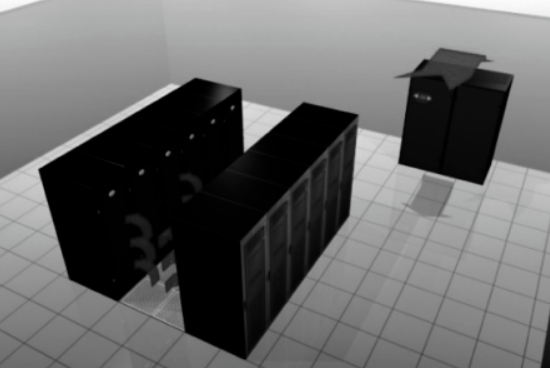
Precision Airflow Delivery for High-Density Racks
As rack power density continued to increase, even raised floor airflow systems began experiencing thermal imbalances and localized overheating.
To solve this issue, precision airflow delivery methods were introduced.
One effective solution is the ducted air supply system, which delivers cooled air directly to specific racks experiencing high thermal loads.
Key advantages of ducted airflow systems include:
- Long air delivery distance
- Targeted cooling for overheated racks
- Reduced risk of hot-spot formation
However, this approach requires precision cooling units with sufficient external static pressure to maintain airflow volume and delivery distance. It also places higher demands on duct design and installation quality.
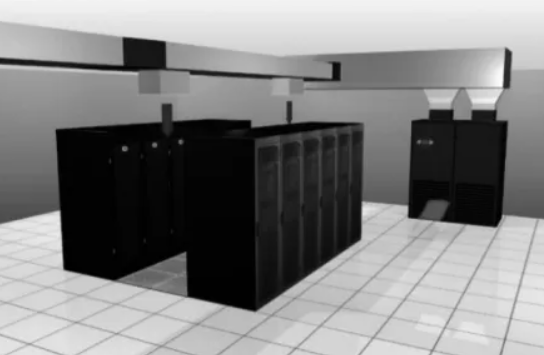
Modern Data Center Cooling: Close-Coupled Cooling Systems
Today, the typical design power density of a data center rack ranges between 5 kW and 10 kW, and in AI environments it can be significantly higher.
To manage these heat loads effectively, modern data center cooling systems often rely on close-coupled cooling architectures.
One common example is horizontal air supply, where precision air conditioning units are installed directly between rack rows. This arrangement places cooling equipment as close as possible to the heat source.
The advantages of this approach include:
- Short airflow distance
- Improved cooling efficiency
- Modular deployment of racks and cooling units
This modular architecture allows data centers to scale infrastructure gradually, enabling operators to expand both computing capacity and cooling resources based on real-world demand.
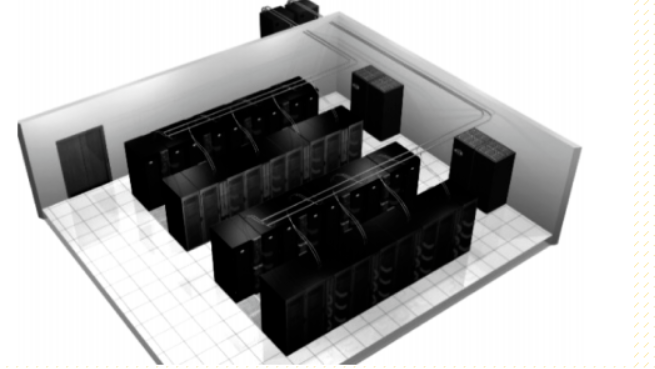
Overhead Cooling for High-Density Data Centers
In high-density environments, two additional airflow strategies are often used:
Overhead Aisle Air Supply
Cold air is delivered from above the server aisle, directly targeting high-density equipment zones.
Top-of-Rack Air Supply
Cooling air is supplied directly above individual racks, providing localized cooling exactly where it is needed.
From a thermodynamic standpoint, these approaches make sense because cold air naturally sinks while hot air rises.
However, these airflow strategies also introduce a design challenge: effective aisle containment becomes more difficult during construction.
Without proper containment, two undesirable airflow conditions may occur:
- Air Recirculation – hot air re-enters equipment intake zones
- Air Bypass – cold air bypasses servers without absorbing heat
Both phenomena disrupt airflow organization and lead to energy waste and cooling inefficiency.
Airflow Performance Metrics in Data Center Cooling
To evaluate the effectiveness of airflow design in data center cooling systems, engineers commonly use several key performance indicators:
- Rack Cooling Index (RCI) – measures rack intake temperature compliance
- Return Temperature Index (RTI) – evaluates airflow management efficiency
- Supply Heat Index (SHI) – indicates mixing between supply and exhaust air
- Return Heat Index (RHI) – measures heat removal efficiency
These metrics help data center operators optimize cooling performance and maintain stable operating temperatures across server infrastructure.
Supporting Data Center Cooling with Cabinet Ventilation Solutions
While large-scale cooling infrastructure handles the overall thermal load, cabinet-level airflow management also plays a crucial role in maintaining stable equipment temperatures.
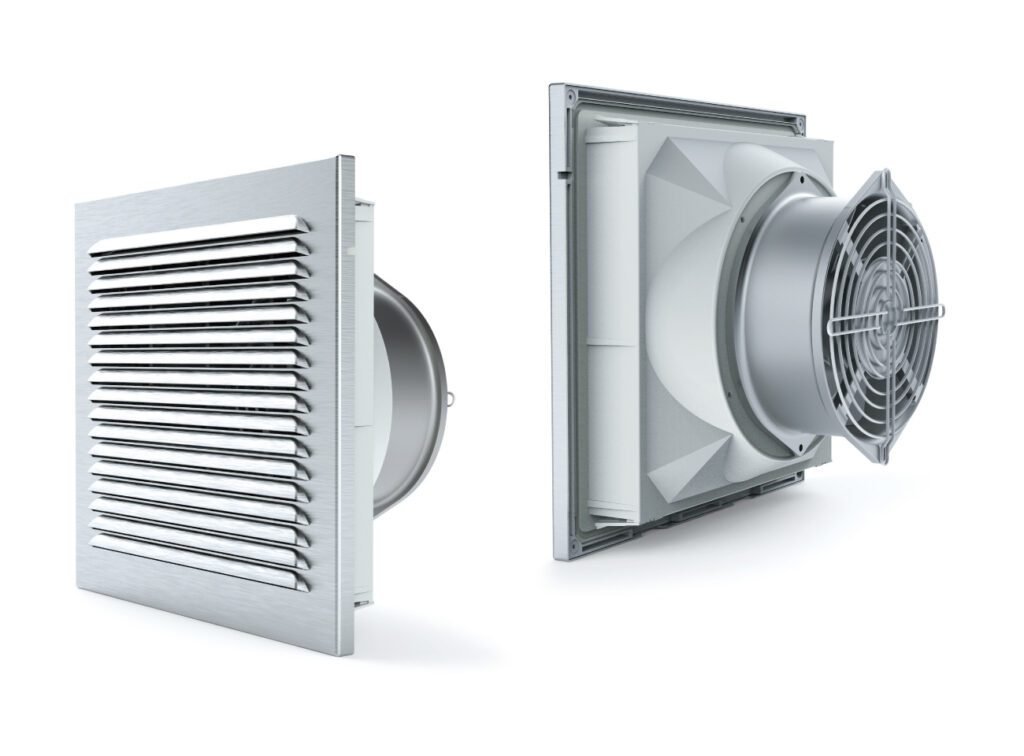
Industrial ventilation components such as fan filters help improve airflow within electrical cabinets, network enclosures, and control panels.
Solutions from LEIPOLE Electric, including their fan filter systems, are designed to:
- Improve cabinet airflow circulation
- Prevent dust and contaminants from entering enclosures
- Support reliable operation of sensitive electronic equipment
These solutions are widely used in industrial automation systems and supporting infrastructure around data centers.
You can explore these cooling accessories here:
https://leipole.com.sg/product/fan-filters/
Proper cabinet ventilation complements large-scale data center cooling strategies, ensuring both server infrastructure and supporting electrical systems remain within safe operating temperatures.