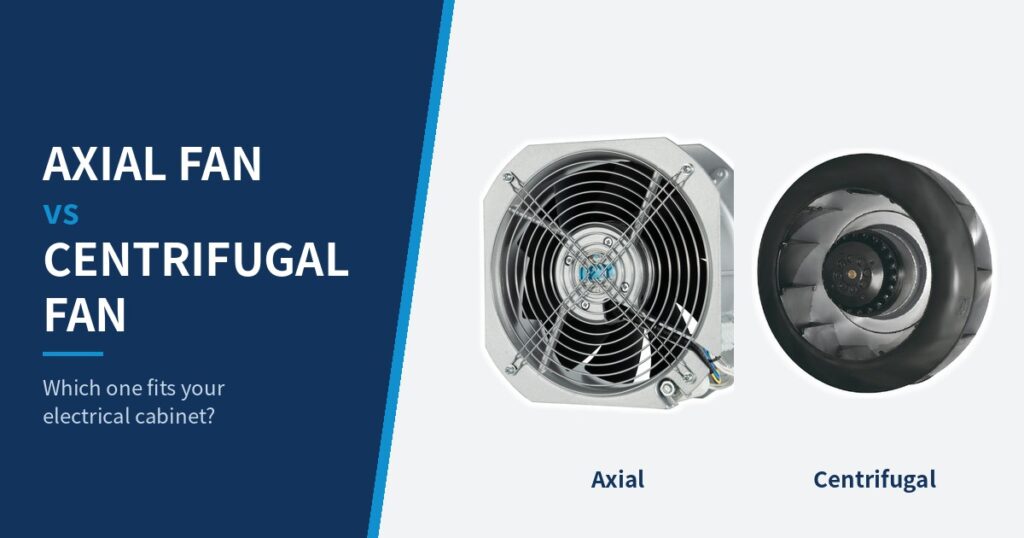
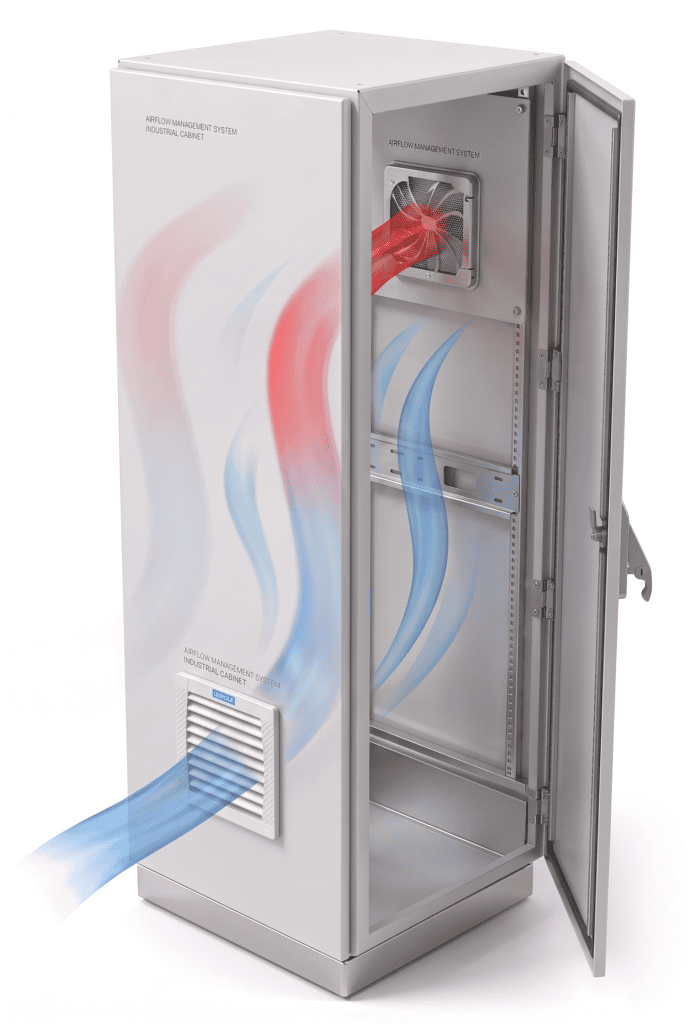
Efficient airflow management in data centers is critical to maintaining stable IT equipment performance and reducing energy waste. Modern cooling methods often integrate axial fans, industrial fans, blower fans, and centrifugal fans to direct airflow effectively and minimize bypass or recirculation. Below are four major approaches commonly used to solve these challenges.
1. Overcooling
To offset the negative effects of hot air recirculation and air mixing, many data centers adopt overcooling—that is, lowering the overall room temperature. The goal is to ensure that all IT equipment intake air remains within acceptable temperature limits.
Drawbacks:
- Excessively low room temperatures reduce overall energy efficiency.
- Overcooling does not fully eliminate local hot spots within racks.
- It often leads to significant energy waste and higher operating costs, even if large-scale electric fans or industrial blowers are used to circulate air.
2. Hot and Cold Aisle Containment
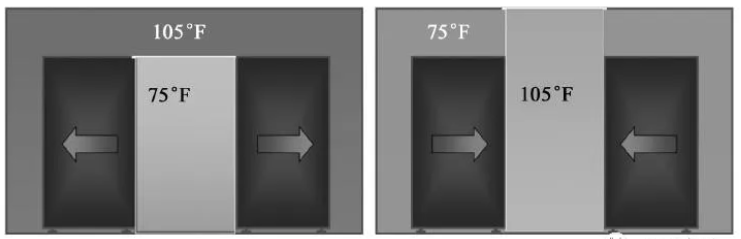
This method physically separates cold supply air from hot exhaust air, directing hot air either back to the cooling unit or outside the room. Two common configurations are:
- Cold Aisle Containment (CAC): The cold aisle is enclosed to prevent mixing.
- Hot Aisle Containment (HAC): The hot aisle is enclosed to collect hot exhaust air.
Drawbacks:
- CAC can increase the ambient room temperature, potentially affecting auxiliary equipment.
- HAC significantly raises the working environment temperature, creating discomfort for staff and limiting the ability to raise supply air temperatures further.
- Uneven rack heat loads can still create localized hot spots, making containment less effective in high-density environments.
In many cases, ac axial fans or centrifugal fans are integrated into containment systems to stabilize airflow and maintain balanced pressure between aisles.
3. Rack-Level Containment (HC)
In this setup, the bottom, sides, and rear of the cabinet are sealed to prevent hot exhaust air from mixing with cold supply air. Cold air enters from the front, while exhaust air is directed upward through ducts at the top of the rack back to the cooling unit.
Drawbacks:
- Passive exhaust may cause hot air leakage through cabinet gaps due to excess pressure.
- Active exhaust can create negative pressure inside the rack, leading to excessive cold air intake from server inlets.
Here, industrial fans and blower fans are sometimes deployed within or on top of racks to enhance air circulation and mitigate leakage, though results may vary.
4. Rack/Hot Aisle Adaptive Airflow Optimization (EAC)
The EAC system provides more advanced cooling efficiency than traditional rack containment. It is specifically designed for high-density racks where overheating issues persist despite sufficient cooling capacity.
Key features:
- Dynamic airflow adjustment: Sensors monitor air pressure at the rear of the rack and adjust the fan speed in real time to match the IT equipment’s exhaust airflow.
- Zero-pressure balance: Dual hot-swappable fans ensure that the rack exhaust matches the server airflow, preventing leakage or negative pressure.
- Energy efficiency: EAC can reduce cooling costs by 30–50% and lower the PUE (Power Usage Effectiveness) value by 0.3–0.5.
- Flexible infrastructure design: With hot air fully sealed inside return ducts, all open space in the room becomes a uniform cold-air environment. This allows CRAC units (Computer Room Air Conditioners) to be placed anywhere, or cooling to be supplied directly via ducts instead of raised floors.
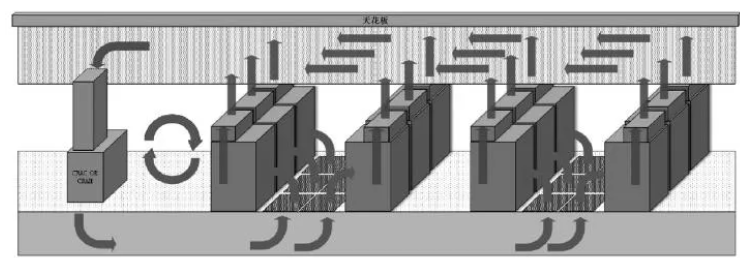
Modern EAC solutions often integrate axial fans and centrifugal fans to maintain stable cooling airflow, ensuring that hot exhaust air is efficiently removed without mixing with the cold supply air.
Advantages of EAC Technology
- Higher Supply Air Temperature → Lower Energy Consumption
- Enables longer periods of free cooling.
- Improves chiller efficiency by raising chilled water temperatures.
- Reduced Airflow Demand
- Cold and hot air separation lowers the total supply air volume required, even when using industrial blowers or electric fans.
- Improved Return Air Temperature Differential
- Cooling units require at least a 10°C delta-T (temperature difference) to achieve rated performance, and EAC helps achieve this more consistently.